At North Sydney Plunge Pools, we build custom concrete pools for homes across North Sydney. We work with local conditions like sandstone ground, tight access blocks, and council requirements. Every pool is built with strong engineering and a clean, practical design that suits the space.
This guide walks you through the full step-by-step process of building a concrete pool in Sydney. It covers timelines, common mistakes, and what affects long-term performance so you can plan your build properly.
What Is a Concrete Pool?
A concrete pool is a custom-built swimming pool made on-site using steel reinforcement and sprayed concrete. It’s built to suit your block, which makes it a good option for family-sized pools, full-size pools, and large swimming pools where standard designs won’t fit.
Unlike pre-made pools, concrete pools are shaped during construction. This means they can be designed for expansive pool designs, especially on blocks that are wide, sloped, or built for outdoor entertaining.
How Long Does It Take to Build a Large Concrete Pool?
Most concrete pools take about 8 to 16 weeks from start to finish.
- Planning: 2 to 6 weeks
- Construction: 6 to 12 weeks
- More complex builds: up to 6 months
The timeline depends on your site, access, and the size of the pool. Larger jobs like full-size pools, large swimming pools, or resort-style pools on wide blocks usually take longer, especially if they include multiple zones or detailed finishes.
Step-by-Step Process to Build a Large Concrete Pool
Building a concrete pool follows a clear sequence. Each step needs to be done properly to avoid problems later.
Simple Overview
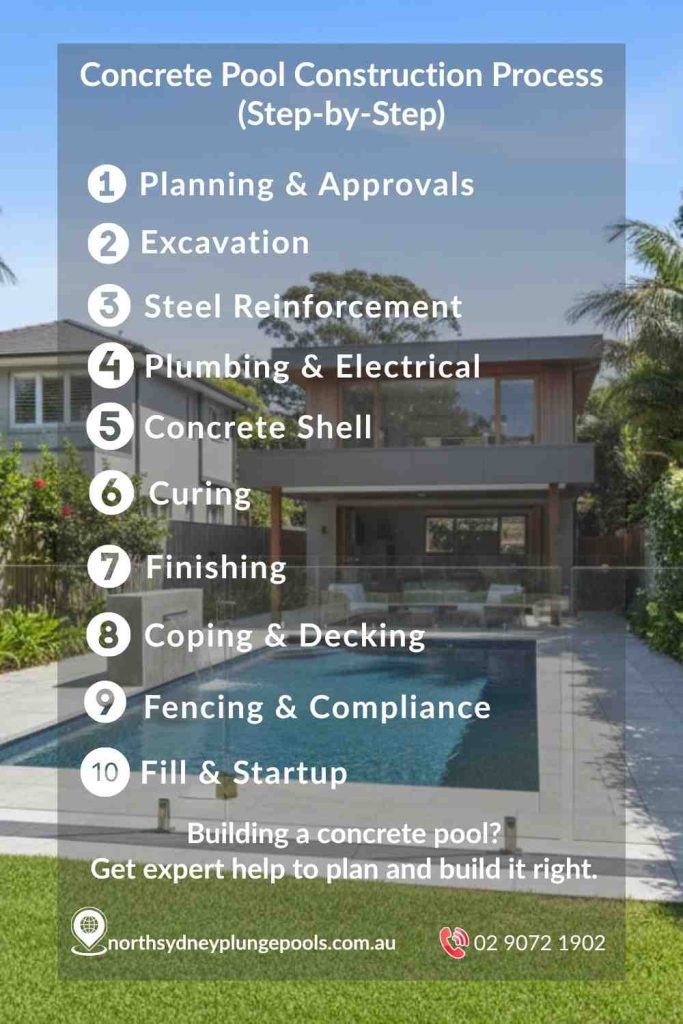
Step 1: Planning, Design, and Approvals
This is where everything is worked out before building starts.
- Choose size, depth, and layout
- Check soil and drainage
- Apply for CDC or DA approval
- Set a realistic budget
Watch for: poor layout choices and missing costs
Real Project Case Study: Concrete Pool Project in Seaforth
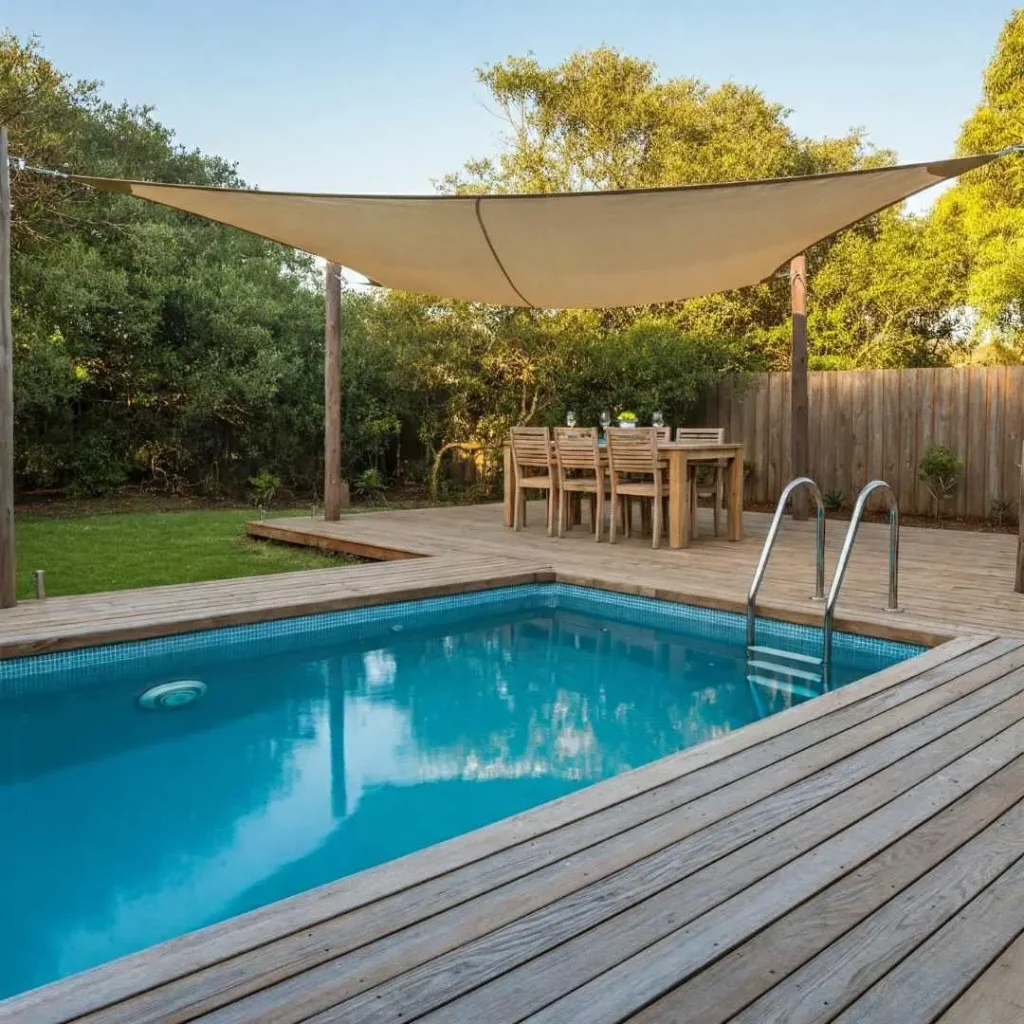
In Seaforth, we recently completed a project that illustrates the importance of planning and design for a successful pool development. The homeowners intended to remodel a huge but underutilised backyard into a contemporary outdoor living room that felt more connected to the home.
The goal was to create a visually interesting and efficient pool area while retaining an open and uncluttered arrangement. Careful design was needed to balance the pool, paving, fence and entertaining areas without taking over the available space.
The finished concrete pool was the centrepiece for the backyard, while maintaining an open and clean atmosphere throughout the house. The outcome is a contemporary, family-friendly outdoor environment for relaxing, entertaining and everyday life.
View our concrete pool project in Seaforth case study.
Step 2: Excavation and Site Preparation
The pool area is dug out and prepared.
- Excavate the pool shape
- Remove soil and debris
- Level and compact the base
Risks: hitting existing pipes, unstable ground
Step 3: Steel Reinforcement
Steel is installed to form the pool structure.
- Set up the rebar framework
- Shape walls, floor, and steps
Why it matters: gives the pool strength and helps prevent cracks
Step 4: Plumbing and Electrical
All water and electrical systems are put in place.
- Install skimmers and drains
- Set return jets
- Connect pumps and lighting
Risk: leaks or faults that are hard to fix later
Step 5: Concrete Application
The pool shell is formed.
- Spray shotcrete or gunite over the steel
- Build up walls and floor
Risk: weak spots or uneven surfaces if done poorly
Step 6: Curing the Concrete
The concrete is left to harden properly.
- Takes around 7 to 28 days
- Needs to stay moist during this time
Risk: cracking if it dries too quickly
Step 7: Waterproofing and Finishing
The inside of the pool is sealed and finished.
- Apply waterproofing layer
- Add surface finish:
- Plaster (smooth, lower cost)
- Pebblecrete (durable, textured)
- Tile (premium finish)
Step 8: Coping, Decking, and Landscaping
The surrounding area is completed.
- Install coping around the edge
- Add decking (timber, concrete, or stone)
- Set up drainage and outdoor areas
Step 9: Pool Fencing and Compliance
Safety and legal requirements are handled.
- Install a 1.2m safety fence
- Fit a self-closing gate
- Add a CPR sign
Step 10: Filling and Startup
The pool is prepared for use.
- Fill with water
- Balance chemicals
- Test all systems
What Factors Affect Pool Quality?
The quality of a concrete pool comes down to how well it’s built for the conditions on your site. Three things matter most.
1. Soil Conditions
The ground your pool sits in affects how it holds up over time.
- Clay expands and moves
- Sand can shift
- Sandstone is hard to excavate but more stable
If the soil isn’t handled properly, it can lead to movement and cracking later.
2. Water Pressure
Water in the ground can push against the pool shell.
- High groundwater adds pressure from below
- Poor drainage makes this worse
This is why proper drainage and hydrostatic relief are important during the build.
3. Structural Integrity
The strength of the pool depends on how it’s built.
- Steel reinforcement handles movement
- Concrete handles pressure
If either is done poorly, the pool won’t last.
Simple Rule
If the ground is poor and the construction isn’t done properly, problems will show up later.
Get the build right from the start to avoid cracks, leaks, and costly repairs down the track.
Common Mistakes to Avoid When Building a Pool
Mistakes during planning or construction can lead to delays, extra costs, and ongoing issues. Most problems come from cutting corners or not planning for the site properly.
1. Planning Mistakes
These happen before the build even starts.
- Choosing the wrong pool type for your block
- Poor layout that wastes space or doesn’t suit how you’ll use it
- Not allowing for access, drainage, or site conditions
A bad plan is hard to fix once construction begins.
2. Cost Mistakes
Costs often blow out when key details are missed early.
- Ignoring site access on tight blocks
- Underestimating excavation, especially with rock
- Making design changes during the build
Small changes during construction can quickly add up.
3. Build Mistakes
These affect how well the pool performs over time.
- Skipping proper engineering
- Poor drainage around the pool
- Low-quality workmanship during key stages
These issues don’t always show straight away, but they lead to cracks, leaks, and repairs later.
Plan for your site, stick to the design, and don’t cut corners during construction.
Conclusion
Building a concrete pool is a step-by-step process that relies on good planning and proper construction at every stage. Getting the design right, understanding your site, and using solid engineering makes a big difference to how the pool performs over time.
If you’re planning a pool in North Sydney, working with an experienced builder helps avoid delays, extra costs, and long-term issues. If you want a concrete pool built properly from start to finish, get in touch with North Sydney Plunge Pools and speak with the team.
FAQ’s
How much does a concrete pool cost in North Sydney?
Most concrete pools cost between $50,000 and $120,000 or more. The final price depends on the size, site conditions, access, and finishes. Rock excavation and tight access can push costs higher.
Can you build a concrete pool on a small or narrow block?
Yes. Concrete pools are built on-site, so they can be shaped to fit tight spaces. Plunge pools and custom layouts are common on smaller North Sydney blocks.
What causes delays when building a pool?
Delays usually come from approvals, weather, and site issues. Rain can slow construction, and unexpected rock or poor soil can stop work. Design changes during the build can also add time.
How do I choose the right pool builder?
Look for a builder with local experience, proper licences, and a track record of completed projects. They should understand site conditions, handle approvals, and follow proper construction standards.
Is concrete better than fibreglass for pools?
Concrete is better for custom designs and difficult sites. Fibreglass is quicker to install and suits simpler layouts. The right choice depends on your block and what you want from the pool.