At North Sydney Plunge Pools, we handle the whole process: design, supply, approvals, access planning, crane coordination, and final compliance. Our work is based on real North Sydney sites, tight driveways, narrow streets, and steep blocks where accuracy matters.
In this article, you’ll learn what happens before delivery day, how your site is prepared, how the pool is transported and lifted into place, and what inspectors check before the pool can be used. You’ll also see common problems, how they’re prevented, and what a successful precast plunge pool delivery looks like from start to finish. So you know exactly what to expect before booking your delivery with confidence.
Why Precast Delivery Is Different
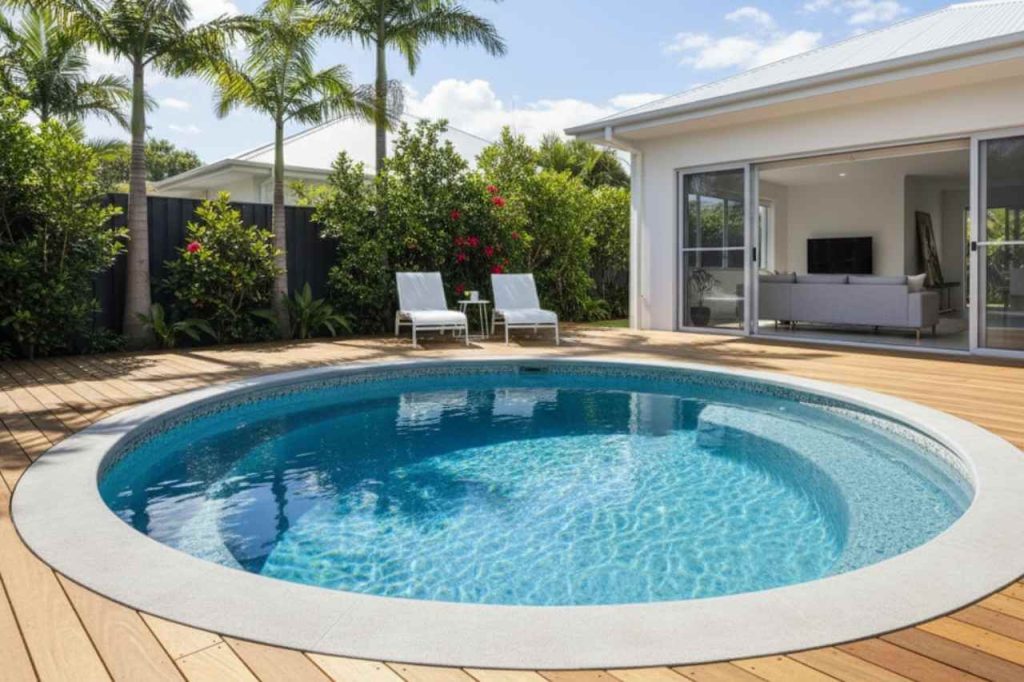
Precast plunge pool delivery is different because the pool is built off-site in a factory and installed in a single day, instead of being constructed piece by piece on your property.
This shifts most of the risk, time, and complexity away from your backyard and into a controlled manufacturing environment.
How Precast vs Traditional Pools Compare
| Pool Type | Where It’s Built | Typical Timeframe | Common Risks |
|---|---|---|---|
| Precast concrete | Factory | 1-day install | Access & crane planning |
| Custom concrete | On-site | 6–10 weeks | Weather, curing, workmanship |
| Fibreglass | Factory + on-site adjustments | 1–2 weeks | Shell flex, levelling issues |
In short, precast delivery shifts construction off-site, reducing delays, weather risks, and on-site mess.
What Work Happens Before a Precast Plunge Pool Is Delivered?
Before delivery, the installer completes council or CDC approval, engineering sign-off, site access and crane assessments, and locks in transport and lift plans. This planning phase prevents delays, failed lifts, and non-compliant installations.
Typical Planning Sequence
- Council approval or complying development check
- Engineering sign-off for the shell, base, and lift method
- Access and crane assessment
- Confirmed delivery date based on site and traffic
- Final paperwork lodged and approved
When paperwork or permits are incomplete, delivery days stall. Trucks wait, cranes stand idle, and costs climb quickly. Experienced precast plunge pool installers treat planning as part of the build, not an afterthought, because a smooth delivery depends on what’s done weeks earlier, not what happens on the day.
How Is Your Site Assessed for Access, Clearance, and Crane Setup?
Your site is assessed by measuring every space the pool and crane must pass through from street access to the final pool position to confirm there is enough clearance, ground strength, and safe lifting conditions before delivery is booked.
Site-Ready Checklist
1. Street Access and Crane Positioning
The first check is whether a crane and delivery truck can legally and physically access your street. This includes:
- Available space for crane outriggers and truck parking
- Road width, turning radius, and council restrictions
- Location for a stable crane pad without blocking emergency access
In North Sydney and similar dense suburbs, this often requires traffic control permits or short-term road closures.
2. Overhead Clearance Checks
Next, all overhead obstructions are measured precisely:
- Power lines and communication cables
- Tree branches and overhangs
- Roof eaves, balconies, and pergolas
Even minor obstructions can prevent a safe crane lift. Laser measuring tools are used to confirm clear lift paths and boom swing radius.
3. Site Access Path Measurement
The pool’s full dimensions—including lift points—are matched against:
- Side access widths
- Setback distances
- Fence gaps and retaining walls
This ensures the pool can be lowered directly into position without rotating or rehandling mid-lift.
4. Ground and Soil Verification for Crane Load
Crane setup isn’t just about space—it’s about ground strength. The installer checks:
- Soil type and compaction where the crane will sit
- Proximity to services, pits, or stormwater lines
- Whether temporary ground protection or steel plates are required
Unstable ground can delay or cancel a lift, even if access looks fine visually.
5. Final Lift Feasibility Approval
Only after access, clearance, and crane loading are confirmed is the delivery booked. This prevents:
- Failed crane lifts
- Costly rebooking fees
- On-site delays that impact neighbours and council compliance
Precast plunge pool crane access planning is not optional; it’s what allows the pool to be installed safely in a single lift. Early assessment protects your timeline, budget, and approval process, especially on tight urban blocks.
What Base Preparation Does a Precast Plunge Pool Require?
A precast plunge pool requires a level, engineered base, either compacted gravel or a concrete slab designed for your soil type, drainage conditions, and pool weight to prevent settlement, cracking, or movement over time.
| Base Type | Best For | Cost | Lifespan | Notes |
|---|---|---|---|---|
| Compacted gravel | Good drainage, stable soil | Lower | 10–20 yrs | Needs correct compaction |
| Concrete slab | Reactive clay, slopes | Higher | 30+ yrs | Engineered for stability |
A precast plunge pool is only as strong as the base it sits on. When the base is engineered correctly, the pool remains level and compliant for decades. When it isn’t, problems appear early, and fixes are expensive.
Choose your base for ground conditions and longevity, not speed.
How Is a Precast Plunge Pool Transported to Your Site?
A precast pool can weigh up to several tonnes, so transport is carefully planned.
- Routes are mapped using logistics software
- Turning circles and bridge heights are checked
- Escort vehicles are used if needed
- Deliveries often occur outside peak traffic
Poor planning can lead to blocked trucks or missed crane windows, so timing is everything.
How Is a Precast Plunge Pool Lifted into Place?
A precast plunge pool is transported on a purpose-built truck using a pre-approved route that accounts for weight, height, turning radius, traffic conditions, and crane timing so the pool arrives safely and exactly when the lift is scheduled.
Precast Pool Delivery in 5 Steps
- Crane setup and stabilisation
- Pool unloaded and attached to the lifting gear
- Pool lifted and guided into position
- Levels checked and confirmed
- Crane released, and site cleared
Homeowners don’t manage the lift but should clear access, secure pets, and inform neighbours. Small preparation steps make a big difference.
What Happens After the Pool Is Placed?
After placement, the pool shell is immediately stabilised through controlled backfilling and compaction to lock it into position, protect plumbing, and prevent movement before the pool is filled with water.
Correct Backfilling:
- Use approved clean material (crusher dust or sand)
- Compact in 200 mm layers around the shell
- Keep pressure balanced on all sides
- Confirm compaction density if required
Incorrect or delayed backfilling is one of the biggest hidden risks in precast plunge pool installation. It may not fail immediately, but it often causes movement, plumbing strain, and costly repairs later.
When backfilling is done correctly, the pool becomes a stable, load-balanced structure ready for finishing and long-term use.
How Are Electrical, Heating, and Pool Equipment Installed After Placement?
After the pool is placed and stabilised, licensed trades install and connect the filtration, electrical bonding, and heating systems in a set sequence, then test them to meet Australian safety standards before the pool can be commissioned.
Heating Options
| System | Pros | Cons |
|---|---|---|
| Heat pump | Energy efficient, long-term savings | Higher upfront cost |
| Gas heater | Fast heating | Higher running cost, needs ventilation |
Incorrect electrical or equipment installation is not just inefficient; it’s unsafe. Poor bonding, missing RCDs, or stressed pipework can shorten equipment life and create real electrical hazards.
When installed correctly, your pool systems run quietly, heat efficiently, and meet all compliance requirements, giving you a safe, reliable plunge pool from day one.
How Is a Precast Plunge Pool Filled, Tested, and Commissioned?
A precast plunge pool is filled gradually after backfilling and equipment installation are complete, then tested and commissioned to confirm structural stability, water balance, and safe operation of all pool systems.
Key Checks
- Fill slowly and evenly to balance pressure
- Backfill must be complete before filling
- Water balanced professionally before first use
- Inspectors confirm pumps, filters, lights, and safety systems
Commissioning is not a formality; it’s a safeguard. Skipping steps or filling too fast can lead to structural stress, leaks, or equipment failure that may not appear immediately.
When done correctly, commissioning ensures your precast plunge pool is stable, safe, and ready to enjoy from day one.
When Is a Precast Plunge Pool Legally Swimmable?
A precast plunge pool is legally swimmable only after final certification is issued, confirming that fencing, gates, barriers, and access points fully comply with Australian pool safety standards and local council requirements.
Completing construction does not mean your pool can be used. In North Sydney and across NSW, a pool becomes legally swimmable only once it passes formal safety inspection and certification.
Final Certification Is the Trigger
Your pool is legally approved for swimming only after a compliance certificate is issued by a registered certifier or council inspector. This certificate confirms:
- All required safety barriers are installed
- Gates and latches operate correctly
- Access from the house and yard is compliant
Without this document, swimming is not permitted—even if the pool is full, clean, and operational.
Learn more the requirements how to pass the council inspection.
What Inspectors Actually Check
Pool safety inspections are detailed and unforgiving. Inspectors assess:
- Self-closing, self-latching gates that swing outward
- Latch height and positioning to prevent child access
- Barrier spacing between vertical and horizontal elements
- Non-climbable zones (NCZs) on both sides of the fence
- Gate swing direction and ground clearance
- Access points from decks, retaining walls, or nearby structures
A precast plunge pool is legally swimmable only after safety certification is issued. Until fencing, gates, and access controls pass inspection, the pool must not be used, no matter how finished it looks.
Certification is the final step that turns a completed pool into a lawful, safe swimming environment.
Landscaping, Paving, and Final Finishes
Landscaping around a precast plunge pool must support the structure, not fight it. Once the pool is compliant, surrounding works can begin, but how these finishes are built matters more than how they look.
How Heavy Finishes Can Stress the Pool Shell
Placing heavy finishes too close to a precast plunge pool can transfer unintended loads into the structure.
Common problem areas include:
- Concrete or stone paving poured hard against the pool coping
- Retaining walls that share backfill or footing zones with the pool
- Built-in seating, planters, or water features anchored near the shell
These elements add static and dynamic loads that can:
- Push laterally against the pool walls
- Increase pressure on the base or footings
- Restrict natural soil movement around the pool
Over time, this can result in:
- Hairline or structural cracking
- Pool shell movement or rotation
- Tile lifting or coping separation
- Drainage failure under paving
This risk is amplified on small North Sydney blocks, where space constraints tempt trades to “build right up to the pool” instead of respecting setback distances.
Correct Setbacks and Load Separation
A well-designed finish layout maintains clear separation between the pool and heavy structures.
Best practice includes:
- Respecting the minimum setback distances specified by the pool engineer
- Using independent footings for paving and retaining walls
- Avoiding shared backfill zones between the pool and other structures
- Designing garden features to be lightweight near the pool edge
Where finishes must be close, engineering solutions such as isolation joints or structural bridging are used to prevent load transfer. Find out more about ways to enhance the beauty of the area around your pool.
How Proper Drainage Protects the Pool Base
Drainage is one of the most critical and most overlooked elements of final finishes.
Finished surfaces should always be graded to:
- Direct water away from the pool shell
- Prevent water ponding against walls or coping
- Avoid saturation of the base material beneath the pool
If surface water is allowed to collect near the pool:
- Base materials can wash out or soften
- Hydrostatic pressure can increase around the shell
- Differential movement becomes more likely
This is particularly important for precast plunge pools installed on reactive soils or sloped sites, which are common in Sydney’s North Shore.
Realistic Timeline: From Excavation to Swim-Ready
While delivery itself takes a few hours, planning takes longer.
Typical Sequence
- Approvals and engineering
- Excavation and base prep
- Crane booking
- Delivery and placement
- Equipment install and compliance
- Water balancing and swim-ready sign-off
In ideal weather, you can be swimming within a few weeks of excavation.
While this section outlines the general stages, our guide explaining how long it takes to build a plunge pool in Sydney from excavation to final certification breaks down each step in detail, including approvals, installation, and commissioning timelines.
What Common Problems Occur During Precast Pool Delivery and How Are They Prevented?
Most precast plunge pool delivery problems are caused by missing permits, access obstructions, or poor coordination, and they’re prevented through early approvals, access checks, contingency planning, and clear communication before delivery day.
1. Missing or Incomplete Permits
Problem:
Delivery trucks or cranes are stopped because council permits, road occupancy approvals, or traffic control plans aren’t in place.
Prevention:
- Confirm all permits weeks in advance
- Align council approvals with crane booking dates
- Use installers who manage approvals, not homeowners
Missing paperwork is one of the fastest ways to lose a crane booking.
2. Blocked or Changed Site Access
Problem:
Parked cars, temporary fencing, scaffolding, or neighbour activity blocks crane setup or truck access.
Prevention:
- Reconfirm access 24–48 hours before delivery
- Notify neighbours in writing
- Keep driveways, streets, and lift zones clear
Even a single parked car can stop a lift in tight North Sydney streets.
3. Weather Disruptions
Problem:
High winds, heavy rain, or saturated ground make crane lifts unsafe.
Prevention:
- Check forecasts continuously in the lead-up
- Keep spare crane dates available
- Pause the lift if conditions exceed safety limits
Professional installers delay rather than force a risky lift.
4. Crane Availability Conflicts
Problem:
Delays on site cause the crane to leave before the pool arrives or before the lift is completed.
Prevention:
- Time transport and crane bookings are precisely
- Schedule buffer windows
- Avoid peak traffic delivery times
Good timing prevents rushed lifts and extra hire fees.
5. Last-Minute Design or Site Changes
Problem:
New fencing, landscaping, or structure changes alter clearances after assessment.
Prevention:
- Lock the site layout before delivery
- Recheck clearances if anything changes
- Pause delivery if conditions no longer match approvals
Most precast pool delivery problems are preventable. When permits are confirmed, access is protected, weather is monitored, and backup plans exist, the delivery day runs smoothly.
Good installers don’t gamble with lifts; they plan them.
How Much Noise and Disruption Should Neighbours Expect on Delivery Day?
Precast plunge pool delivery causes short-term, high-intensity noise from cranes and trucks, but disruption is usually limited to a few hours when the lift is planned and executed correctly.
What Neighbours Will Hear
On delivery day, neighbours can expect:
- Crane engine and hydraulic noise during setup and lift
- Truck movements and brief street occupation
- Short bursts of radio communication between crew members
The noisiest period is typically 1–3 hours, not an all-day build like traditional pool construction.
How Long Does Disruption Actually Lasts
Most precast pool deliveries follow this sequence:
- Early arrival and crane setup
- Single-controlled lift of the pool shell
- Crane and truck departure shortly after placement
Once the pool is in position, heavy machinery leaves, and noise drops dramatically.
Why Neighbour Communication Matters
Unannounced cranes and trucks are the fastest way to trigger complaints or council calls. A simple neighbour communication plan helps prevent this:
- Share the delivery date and estimated time window
- Explain that trucks and a crane will be present briefly
- Provide a contact number if driveway access is affected
In dense suburbs like North Sydney, this courtesy step often makes the difference between cooperation and conflict.
Council and Compliance Considerations
Deliveries are scheduled within permitted construction hours, and traffic control plans may be in place if required. Clear communication helps neighbours understand that:
- The work is approved and temporary
- Access will be restored quickly
- Noise is time-limited and controlled
Precast plunge pool delivery is noisy but brief. With good planning and early neighbour notice, disruption is measured in hours, not days.
A simple heads-up keeps the street calm and delivery day smooth.
Precast vs Fibreglass vs Concrete
Precast concrete pools install fastest with high structural strength, fibreglass pools suit simple sites with limited customisation, and custom concrete pools offer full design freedom but take the longest to build and cost more.
| Pool Type | Speed | Durability | Customisation | Ideal Use |
|---|---|---|---|---|
| Precast concrete | Fast | Very strong | Moderate | Tight or sloped blocks |
| Fibreglass | Moderate | Medium | Limited | Stable, easy sites |
| Custom concrete | Slow | High | Full design freedom | Complex designs |
Precast concrete combines the efficiency of factory construction with the strength of reinforced concrete. That’s why it’s often the smartest choice for tight sites, sloping land, and owners who want speed without compromising structure.
Homeowner Delivery Checklist
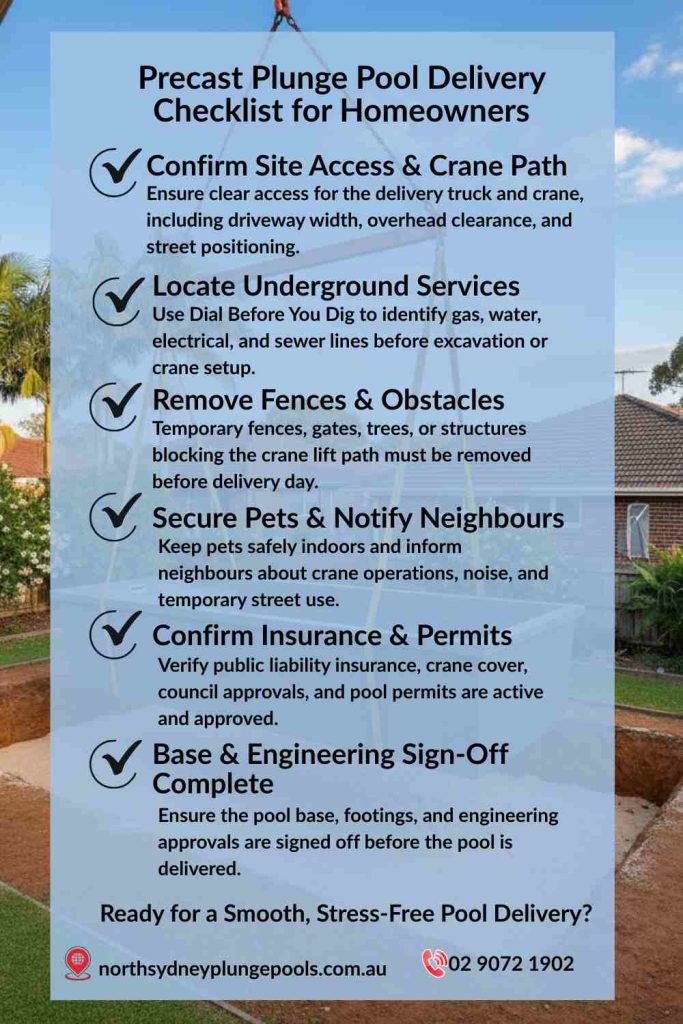
This list prevents most day-of delays.
Final Outcome: What a Successful Precast Pool Delivery Looks Like
A successful precast plunge pool delivery is quiet, precise, and uneventful. When everything is done correctly, there is no rushing, no last-minute fixes, and no visible stress on the site.
Final handover includes compliance certificates, engineering documents, warranties, and a clear explanation of how to operate and maintain the pool. Owners are shown how systems work and what to monitor over time. This step completes the delivery process and sets expectations for long-term care.
At North Sydney Plunge Pools, this is the standard we work to on every project. If you’re planning a precast plunge pool delivery in North Sydney, reaching out early helps ensure your project follows this path from planning to placement to confident handover.
FAQs
1. Will a precast plunge pool fit on my North Sydney property?
Yes, most North Sydney properties can accommodate a precast plunge pool. Fit depends on access width, overhead clearance, crane reach, and pool size. A proper site assessment confirms whether delivery and lifting can be done safely and legally.
2. What happens if delivery day fails because of access or planning issues?
Delivery can be delayed, and extra costs may apply. If access is blocked or approvals are missing, crane standby or rebooking fees can occur. These risks are avoided when access, documents, and lift plans are confirmed well before delivery day.
3. How long does precast plunge pool delivery and setup actually take?
The delivery and placement usually take a few hours.
Most time is spent on planning, approvals, and site preparation beforehand. Once delivered, the pool is placed by crane in a single lift, unlike weeks of on-site construction.
4. What does the final inspection check before the pool can be used?
Inspectors check fencing, gates, and safety barriers for compliance. They assess gate self-closing, latch height, non-climbable zones, and barrier spacing. The pool can only be used after certification confirms it meets Australian pool safety standards.
5. Is precast plunge pool delivery better than fibreglass or custom concrete for my site?
Precast delivery is often better for speed, strength, and control. It suits tight North Sydney sites by reducing on-site work and errors. Fibreglass suits lighter access, while custom concrete suits bespoke designs but takes much longer to build.