At North Sydney Plunge Pools, we help local homeowners make this decision every day. We install both precast concrete and fibreglass plunge pools across North Sydney and see what works and what fails in real-world conditions. From tight-access sites to reactive soil and council requirements, our experience comes from building pools, not just selling them. This guide is based on how these pools actually perform once they are in the ground.
In this article, you will learn how precast concrete and fibreglass plunge pools are made, how they interact with soil and water pressure, and what this means for lifespan, maintenance, cost, and safety. We will walk through the installation process, site suitability, compliance rules, and long-term ownership outcomes so you can choose the right plunge pool for your North Sydney home with confidence.
What Is a Precast Concrete Plunge Pool?
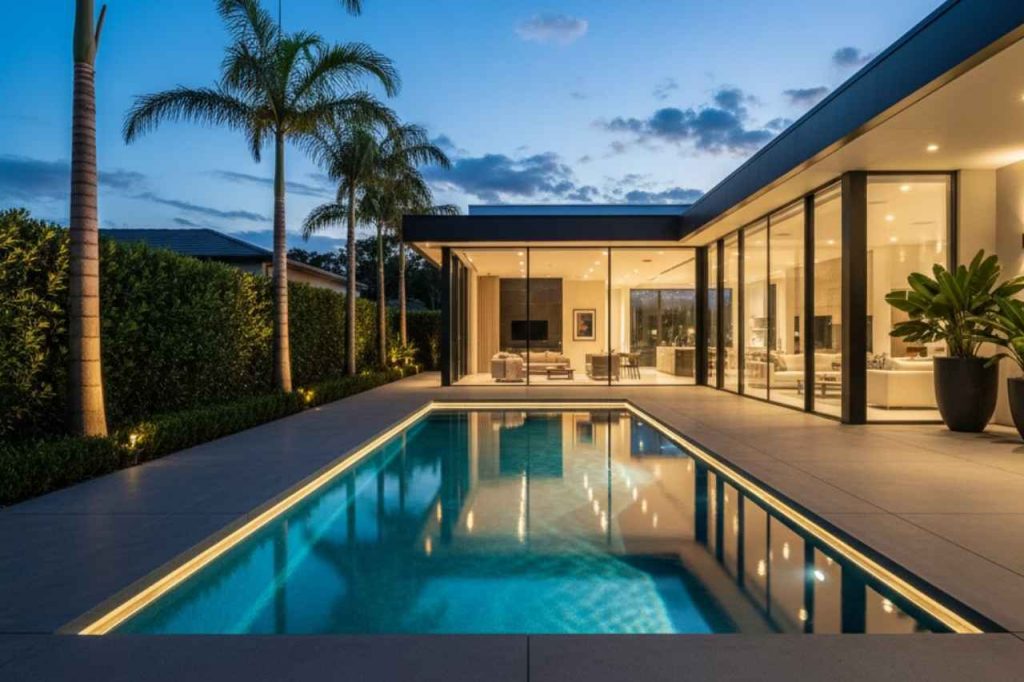
A precast concrete plunge pool is manufactured off-site in a controlled factory environment, not built from scratch in your backyard.
The pool shell is poured into a mould, reinforced with steel, cured to achieve structural strength, and then transported to the site and craned into position as a single solid unit following site excavation and base preparation.
Key Points
- Made off-site under controlled curing conditions
- Strong, solid concrete shell certified by structural engineers
- Performs well in Sydney’s sandstone, clay, and reactive soils
- Requires correct drainage and engineered backfill to prevent ground movement or lifting
Best for: tricky sites, reactive soil, or when you want a pool that feels built-in for life.
Watch for: poor drainage = hydrostatic pressure and possible movement.
If you’re also deciding how the pool should sit on your block, our guide to above-ground and in-ground precast plunge pool options explains how each installation style affects access, appearance, drainage, and long-term practicality.
How a Precast Concrete Plunge Pool Is Made
A precast concrete plunge pool is formed in a factory using reinforced structural concrete, not sprayed or hand-finished on site. Steel reinforcement cages are installed inside the mould before concrete is poured, ensuring consistent wall thickness and load distribution.
Once poured, the concrete is factory cured, allowing it to reach a predictable compressive strength. This controlled curing process reduces cracking risk compared to site-built concrete pools, where weather, moisture, and timing can affect quality.
Before leaving the factory, the shell is typically engineer-certified, meaning it meets Australian structural standards for strength and durability.
When a Precast Concrete Plunge Pool Makes Sense
A precast concrete plunge pool is often the right choice if you want:
- A long-lasting concrete pool with predictable structural performance
- Faster installation than traditional concrete pools
- A pool suitable for tight Sydney blocks or difficult soil conditions
- Engineered certainty rather than on-site variability
For homeowners who want durability, engineered confidence, and a built-in finish, our precast concrete plunge pool solutions for Sydney homes are designed to suit complex sites, reactive soil, and tight-access installations.
What Is a Fibreglass Plunge Pool?
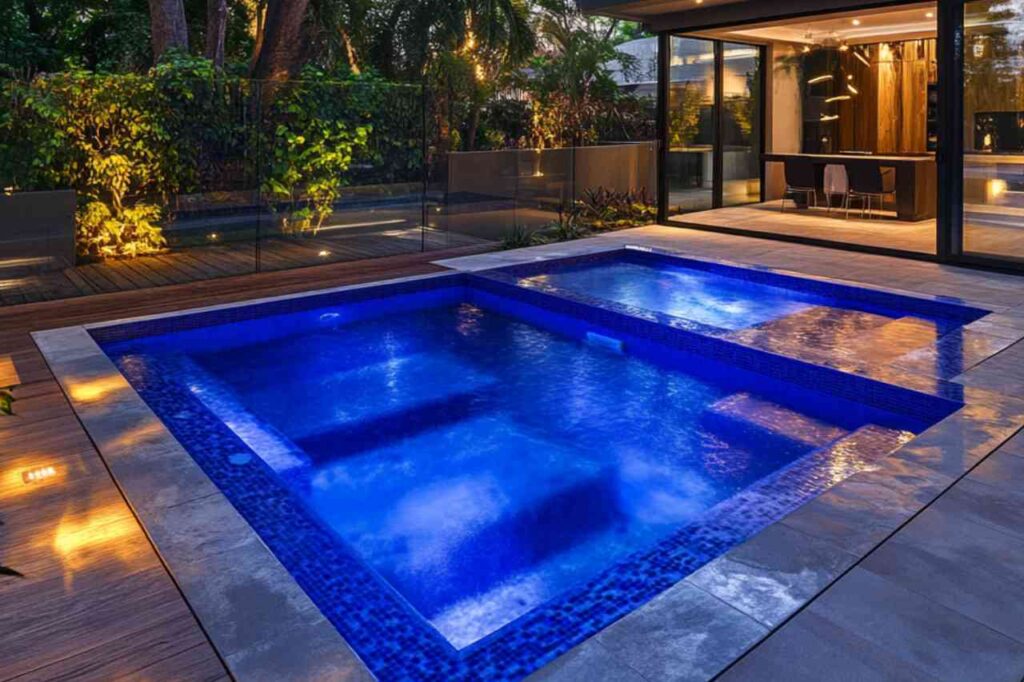
A fibreglass plunge pool is a compact, factory-built swimming pool designed for small backyards, courtyards, and tight-access sites. Unlike concrete pools that are built on-site, fibreglass plunge pools are manufactured in controlled factory conditions, then craned or lowered into place as one complete unit, reducing overall installation time.
How Fibreglass Plunge Pools Are Made
Fibreglass plunge pools are formed using:
- Multiple fibreglass laminate layers
- Structural resin bonding
- A smooth, non-porous surface gelcoat
This process creates a strong but lightweight shell with consistent thickness and quality, something that’s harder to guarantee with on-site construction.
Is a Fibreglass Plunge Pool Right for You?
A fibreglass plunge pool is best suited to homeowners who want:
- A simple, fast pool installation
- Minimal ongoing maintenance
- A proven, factory-built pool system
- A practical solution for tight-access or inner-city properties
If your site has unstable soil, complex engineering needs, or requires a fully custom shape, other plunge pool options may be worth considering. But for many homes, fibreglass plunge pools offer one of the most efficient and reliable ways to add a pool quickly.
Structural Integrity and Lifespan: What Actually Lasts Longer?
When homeowners compare fibreglass vs concrete plunge pools, longevity is often the deciding factor. But material strength alone doesn’t determine how long a pool lasts underground. The real performance difference shows up in how each shell responds to soil movement, groundwater pressure, and long-term site conditions.
| Feature | Precast Concrete | Fibreglass |
|---|---|---|
| Structure | Rigid, reinforced shell resists deformation | Flexible shell absorbs minor movement |
| Risk | Cracking if drainage is poor | Shape distortion if the support is uneven |
| Surface life | Can be resurfaced easily | Gelcoat may fade or bubble over time |
| Lifespan | 25+ years with good drainage | 15–25 years with careful chemistry |
Takeaway: longevity depends more on installation and drainage than the material itself.
Site Suitability: Which Pool Works on Which Block?
The best plunge pool depends on your site conditions. Pools generally fail when the material choice doesn’t match the ground it sits in.
| Site Factor | Best Option | Why |
|---|---|---|
| Reactive clay or slopes | Precast concrete | Heavy shell resists ground movement |
| Sandy soil | Fibreglass | Drains well and supports a light shell |
| Tight access lanes | Fibreglass | Lighter to crane and position |
| Heavy load areas | Precast concrete | Engineered for stability |
Match the pool to your site, not the trend; that’s where most installation problems start.
Design, Finish and Aesthetic Flexibility
Design is not just about how a pool looks on day one. It is about how it fits into your home and how it ages over time. Precast concrete and fibreglass plunge pools offer different levels of design flexibility.
Precast concrete plunge pools allow more freedom in finishes. Tiles, render, pebblecrete, and even custom edge details such as a vanishing edge (often called infinity styling) can be incorporated to suit the architecture of the home.
Fibreglass plunge pools are limited to factory mould shapes and colours. While the gelcoat finish looks clean and smooth initially, exposure to UV, water chemistry, and poor maintenance can lead to fading, surface dulling, and algae growth if cleaning lapses occur.
Over time, surface durability matters. Concrete finishes can fade or wear, but they can also be resurfaced. Fibreglass gelcoat is exposed to sunlight and chemicals. If water chemistry is not maintained, UV fade and surface dulling can occur. Once gelcoat breaks down, repairs can be more noticeable.
For homes with strong architectural design or custom landscaping, precast concrete often integrates more naturally. For simpler outdoor spaces where speed and consistency matter, fibreglass can still provide a neat and functional result.
What Are the Maintenance, Water Chemistry, and Long-Term Ownership Costs of Concrete vs Fibreglass Plunge Pools?
Over 10 years, concrete and fibreglass plunge pools cost roughly the same to own, but the expenses occur at different times. Concrete pools need more regular chemical management and may require resurfacing later, while fibreglass pools are cheaper to maintain early but can face higher gelcoat repair costs long term.
Fibreglass pools require fewer chemicals because the smooth surface discourages dirt adhesion and reduces the chance of microscopic pores where alga can anchor.
| Period | Concrete | Fibreglass |
|---|---|---|
| 1–3 yrs | Balance chemicals carefully | Easy cleaning, low care |
| 4–7 yrs | Stable surface | Watch for gelcoat wear |
| 8–10 yrs + | May need resurfacing | Gelcoat repairs can be costly |
Takeaway: total 10-year costs are similar, just different timing.
To know more about maintenance of plunge pools, check out our plunge pool maintenance article
Which Is More Energy Efficient: Concrete or Fibreglass Plunge Pools?
Fibreglass plunge pools are generally more energy efficient than concrete plunge pools because the fibreglass shell insulates the water, reducing heat loss and lowering ongoing heating costs. Concrete plunge pools rely on thermal mass, which can help with daytime heat retention but usually requires more energy overall to maintain temperature.
Fibreglass Plunge Pools: Lower Heating Demand
Fibreglass plunge pools are naturally non-conductive, meaning they lose heat more slowly than concrete. This insulation effect helps keep water temperatures stable overnight and during cooler months. As a result, fibreglass plunge pools require less heater run time, making them more energy efficient and cheaper to operate long term.
Because fibreglass surfaces are smooth and non-porous, pool pumps and filtration systems also work more efficiently. This reduces electricity usage and supports better energy-efficient pool maintenance, especially for smaller plunge pool volumes.
Concrete Plunge Pools: Thermal Mass with Trade-Offs
Concrete plunge pools have high thermal mass, allowing them to absorb heat during warm days. In sunny conditions, this can slightly reduce heating needs in the short term. However, concrete also transfers heat into the surrounding soil, particularly in cooler climates or shaded sites.
Over time, this heat loss means concrete plunge pools often need more frequent heating, especially if paired with gas or electric heaters rather than solar systems. Without additional insulation, concrete pools are typically less energy efficient than fibreglass alternatives.
Sustainability and Long-Term Energy Use
Both concrete and fibreglass plunge pools can be energy efficient and sustainable if installed correctly and maintained properly. A well-installed pool that avoids structural movement, leaks, or surface damage will always outperform one that requires ongoing repairs or resurfacing.
Regardless of material, balanced water chemistry reduces energy waste, protects pool equipment, and extends the lifespan of heaters, pumps, and filters. Choosing energy-efficient pumps, pool covers, and heating systems plays a major role in reducing overall energy consumption.
If your priority is lower energy bills and efficient heating, fibreglass plunge pools usually perform better. Concrete plunge pools can still be energy-conscious, but they often require more active heating to maintain consistent temperatures. The most energy-efficient plunge pool is one that suits your site conditions, is installed correctly, and is maintained with efficiency in mind.
What Hidden Costs Are Involved in Concrete vs Fibreglass Plunge Pool Quotes?
Hidden costs in concrete vs fibreglass plunge pool quotes usually don’t appear in the headline price. They show up during site works, compliance, and installation logistics. Fibreglass plunge pools are typically cheaper upfront, while precast concrete plunge pools often cost more initially but deliver better long-term durability and property value.
Hidden costs to check:
- Crane hire & street setup
- Soil prep and drainage system
- Engineering for slopes or retaining walls
- Council approval, fencing, and certification under AS 1926
Concrete installations typically involve higher labour input and increased labour costs, while fibreglass pools reduce onsite work but can incur access-related crane expenses.
Check out our plunge pool cost article for more information.
How Do Safety, Compliance, and Australian Standards Differ for Concrete vs Fibreglass Plunge Pools?
The key difference is how compliance is demonstrated: precast concrete plunge pools require independent structural engineering certification, while fibreglass plunge pools rely on manufacturer certification plus installer inspection.
A fully compliant pool is safer to use, easier to insure, and simpler to sell.
| Pool Type | Certification Needed |
|---|---|
| Precast concrete | Structural engineering sign-off |
| Fibreglass | Manufacturer certificate + installer inspection |
Compliant pools are safer to use, easier to insure, and simpler to sell.
If your household includes young children, our guide on how to make a precast plunge pool safe for kids explains the practical safety features, barrier planning, and supervision-focused design choices that matter beyond basic compliance.
How Do Concrete and Fibreglass Plunge Pools Affect Resale Value and Property Appeal?
A well-installed plunge pool adds value regardless of material. Buyers focus on condition, certification, and visible care, not what’s better according to marketing.
Buyers look for:
- Certified installation
- Solid structure (no cracks or fading)
- Easy-care surface and equipment
A well-installed plunge pool adds value and buyer confidence; a poor job hurts it.
Quick Decision Guide
| Factor | Precast Concrete | Fibreglass |
|---|---|---|
| Upfront cost | Higher | Lower |
| Install speed | Longer | Faster |
| Site difficulty | Handles complex sites | Best for simple sites |
| Design choice | Custom finishes | Fixed moulds |
| Maintenance | More care, but repairable | Low care but limited repairs |
| Lifespan (typical) | 25+ yrs with drainage | 15–25 yrs with good care |
Choose based on your block and tolerance for maintenance, not marketing.
Conclusion
Precast concrete and fibreglass plunge pools are not competitors; they are solutions to different site challenges. Choosing the best option depends on your soil, access, drainage, and long-term expectations, not trends or price tags.
If your site needs strength, drainage certainty, and a more permanent finish, explore our precast plunge pool range to see what suits your block and long-term plans.
FAQs
1. Which plunge pool is better for my block in North Sydney?
The better plunge pool depends on your soil, access, and drainage. Precast concrete suits reactive or sloping sites, while fibreglass suits stable ground with tight access. In North Sydney, block conditions matter more than material preference.
2. How do soil conditions and drainage affect precast concrete vs fibreglass plunge pools?
Soil movement and drainage directly affect pool stability.
Precast concrete resists movement through weight and rigidity, while fibreglass relies on flexibility and even support. Poor drainage increases hydrostatic pressure, which can cause lifting, cracking, or distortion in both pool types.
3. What are the most common long-term problems with precast concrete and fibreglass plunge pools?
Long-term problems are usually installation-related, not material-related.
Concrete pools may crack if drainage is poor, while fibreglass pools may suffer gelcoat damage or shell distortion if backfilling or water chemistry is incorrect. Good engineering prevents most issues.
4. What is the real total cost difference once installation, access, and compliance are included?
The real cost includes crane hire, engineering, drainage, and compliance, not just the pool shell. Fibreglass is often cheaper upfront, but complex sites can close the gap. Precast concrete costs more initially but can offer stronger long-term value.
5. How do I know which option will last longer and add value to my property?
The pool that lasts longer is the one matched correctly to the site. A well-installed precast concrete or fibreglass plunge pool can both add value. Buyers care more about condition, compliance, and maintenance history than the material itself.