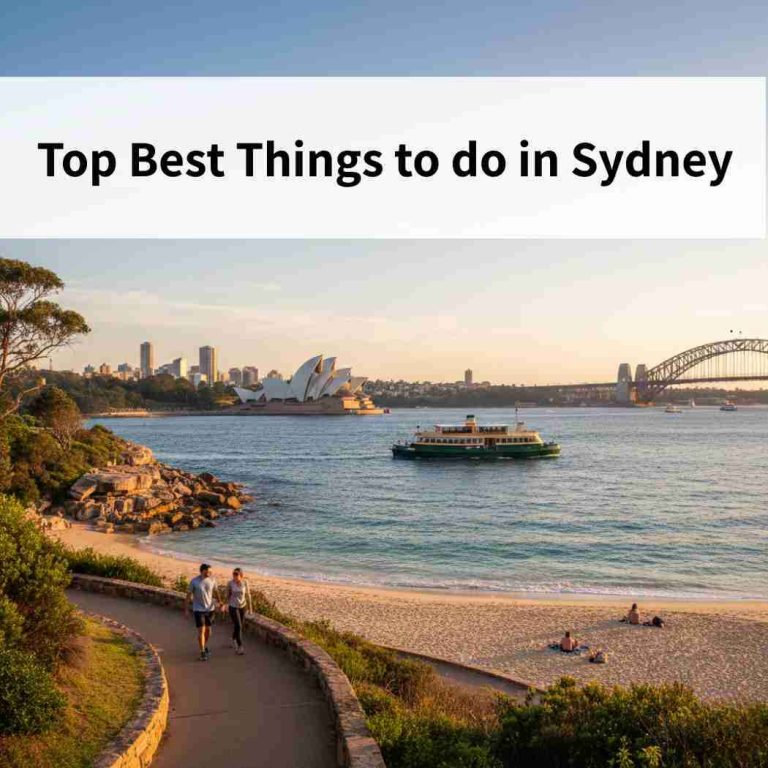
At North Sydney Plunge Pools, we work with local homeowners who live this outdoor lifestyle every day. We design plunge pools suited to the climate, block sizes, and way of life here. Being local means we don’t see the area as a checklist destination, but as one of my favourite cities, built to be enjoyed slowly.
This guide shows you the best things to do in Sydney without rushing or wasting money. You’ll learn what truly matters, how areas connect, and how to plan days the way locals do, whether you have one day, a weekend, or longer—practical travel inspiration you can actually use.
Table of Contents
ToggleSydney at a Glance: What Should You Do First?
If you’re short on time in Sydney, start around the harbour. Walk Circular Quay to the Opera House, see or cross the Harbour Bridge, relax in the Royal Botanic Garden, ride the ferry, and visit a beach. These clustered experiences show Sydney at its best with minimal travel.
Walking the harbour, seeing the Opera House, and crossing the bridge all sit firmly on Australia’s bucket list for first-time visitors.
Quick must-do experiences (any stay length)
- Walk from Circular Quay to the Opera House
- Walk across or beside the Harbour Bridge
- Relax in the Royal Botanic Garden
- Take one public ferry ride
- Visit one beach, not three
These aren’t tourist tricks. They’re the experiences locals return to again and again, especially when you want a view of the harbour moments without paying for them.
Free vs paid: what’s actually worth it
Many of Sydney’s best experiences are free.
Free experiences that rival paid ones
- Harbour walks instead of harbour cruises
- Public ferries instead of sightseeing boats
- Coastal walks instead of guided tours
Paid experiences are only worth it when they offer access, timing, or learning you can’t get on your own—so ensure you don’t pay for something you can get for free just by walking at the right time.
How Should You Spend One Day in Sydney?
You should spend one day in Sydney by staying in one area near Sydney’s CBD: walk the harbour and Royal Botanic Garden in the morning, ride the ferry and have a casual lunch at midday, choose a beach or coastal walk in the afternoon, and finish with harbour views at sunset. This avoids wasted travel time and lets you experience Sydney’s best scenery at a relaxed pace.
For many travellers, these are the first things that define a memorable trip to Sydney without unnecessary stress, especially if you want views over the city without booking a whole day of paid attractions.
Morning: Harbour Walk + Royal Botanic Garden
Start your day with a harbour walk from Circular Quay. This puts you immediately between the bridge and opera house, Royal Botanic Garden, and Harbour Bridge views, all within walking distance. The Royal Botanic Garden is one of the best free things to do in Sydney, offering shaded paths, harbour viewpoints, and calm spaces that feel far from the city despite being central.
These paths deliver beautiful views at ground level, often outperforming paid observation decks—particularly if your goal is a clean view of the opera with water in front.
Midday: Ferry Ride + Casual Lunch
Next, take a short ferry ride from Circular Quay. Even a quick trip to Manly or Barangaroo doubles as sightseeing and transport, making ferries one of the best value experiences in Sydney. For lunch, stick to casual waterfront dining—Sydney does this well, and you won’t waste time sitting indoors when the harbour is the main attraction.
Afternoon: Beach or Coastal Walk
In the afternoon, choose one experience: either a Sydney beach (Manly is easy by ferry) or a short coastal walk. Trying to do both usually means rushing. Coastal paths and beaches show why Sydney’s lifestyle is so outdoor-focused, even for visitors on a tight schedule, and why the world-famous Bondi Beach can feel best when you plan around crowds and sun.
Evening: Harbour Views at Sunset
End your day back near the water. Sunset harbour views—from Circular Quay, Barangaroo, or Mrs Macquarie’s Chair—are often free and consistently memorable. This is where Sydney shines without needing tickets, tours, or reservations, and where you’ll catch those stunning views that people remember most.
This avoids crossing the city back and forth, where time and energy disappear.
The Biggest Mistake Visitors Make
The most common mistake when planning a day in Sydney is rushing between distant attractions and skipping the free experiences near the CBD. Sydney’s best views, walks, and moments are often public, walkable, and close together. When you slow down and choose well, one day in Sydney feels full—not rushed—so you don’t end the day thinking about what you want to miss next time.
What Are Sydney’s Absolute Must-Do Icons?
Sydney’s absolute must-do icons are the Sydney Opera House, Sydney Harbour Bridge, and the Royal Botanic Garden with Mrs Macquarie’s Chair. Most visitors can experience them fully for free on foot, using the Circular Quay walking route that links harbour views, landmarks, and gardens without tickets or time pressure.
For visitors who want a single indoor lookout, Sydney Tower offers elevated city views, though most harbour perspectives are better experienced on foot around the water.
If you want a single, high-impact lookout, you can also chase 360-degree views from a paid vantage point, but most travellers don’t need it if they walk well.
Sydney Opera House: Walk, Tour, or Performance?
The Sydney Opera House is as much a public space as it is a performance venue, and the famous opera house experience is often better outside than inside.
- Free walking around the Opera House is the best option for most visitors. You get uninterrupted harbour views, close-up photos of the sails, and the atmosphere of Circular Quay without paying anything.
- Guided tours are worth it if you’re interested in architecture, engineering, or the building’s history, but they’re not essential for first-time visitors.
- Performances are only worth the price if you already enjoy opera, music, or theatre. The building itself is the main attraction.
Local takeaway: Most people only want the view — and that part is completely free.
Sydney Harbour Bridge: Free vs Paid Experiences
The Harbour Bridge is another icon where the free option delivers most of the value.
- Free pedestrian walk across the bridge offers sweeping harbour views and photo opportunities with no booking or cost.
- Pylon Lookout is a low-cost alternative if you want a higher viewpoint and some history without crowds.
- BridgeClimb is expensive and best suited to thrill-seekers rather than casual sightseers.
Local takeaway: For most visitors, the free Harbour Bridge walk gives you the core experience.
Royal Botanic Garden & Mrs Macquarie’s Chair
This is Sydney’s best free landmark combination and often the most memorable.
The Royal Botanic Garden provides flat, shaded walking paths with constant harbour views, while Mrs Macquarie’s Chair delivers one of the city’s best photo angles of the Opera House and Harbour Bridge together. It’s peaceful, scenic, and costs nothing.
Best Walking Route (No Tickets Required)
Circular Quay → Opera House → Royal Botanic Garden → Mrs Macquarie’s Chair
This route works so well because it’s:
- Flat and easy to walk on
- Mostly shaded
- Rich in harbour viewpoints
- Completely free
Why This Route Works for First-Time Visitors
If you’re short on time or want to avoid over-planning, this walking route covers Sydney’s most important landmarks in one continuous experience. It suits first-time visitors, budget travellers, families, and anyone who wants to see Sydney at a relaxed, local pace.
Bottom line: You don’t need tours, tickets, or tight schedules to experience Sydney’s top icons, just comfortable shoes and time to walk.
What’s the Best Way to Experience Sydney Harbour?
The best way to experience Sydney Harbour is by public ferry. Sydney’s public ferries cost less, run frequently, and deliver the same iconic harbour views as paid cruises—without fixed schedules or inflated prices. One ferry ride feels like a guided tour, but with freedom to hop on and off.
Why Public Ferries Beat Harbour Cruises
For most visitors, public ferries are the smartest way to see Sydney Harbour:
- Lower cost: Included with regular Opal fares; no premium pricing
- High frequency: Ferries run all day, so you’re never locked into a timetable
- Identical views: Opera House, Harbour Bridge, skyline, coves, and beaches
- Freedom to explore: Get off at wharves, walk, eat, then continue your journey
If your goal is sightseeing rather than ceremony, ferries deliver better value and flexibility than most Sydney Harbour cruises.
Which Ferry Routes Are Best for Sydney Visitors?
The best ferry routes for Sydney visitors are Circular Quay to Manly, Taronga Zoo, Barangaroo, and Watsons Bay. These routes combine iconic harbour views, easy access, and useful destinations, making them ideal for first-time visitors and short stays.
Circular Quay → Manly Ferry
This is the most famous ferry ride in Sydney and is often ranked among the best ferry journeys in the world. The route passes the Sydney Opera House and Harbour Bridge before crossing open harbour waters to Manly.
Why it’s great:
- Iconic harbour scenery
- Direct access to Manly Beach and coastal walks
- Frequent departures and easy return
Best for: First-time visitors, beach lovers, and budget travellers wanting a full experience for the price of a public transport ticket.
Circular Quay → Taronga Zoo Ferry
A short but dramatic ride across the harbour, this route offers excellent photo opportunities and elevated views back toward the city skyline.
Why it’s great:
- One of the best skyline perspectives of Sydney
- Combines ferry travel with a major attraction
- Worth doing even if you don’t enter the zoo
Best for: Families, photographers, and visitors with limited time.
Circular Quay → Barangaroo Ferry
This route showcases Sydney’s modern waterfront, contrasting historic Circular Quay with contemporary Barangaroo.
Why it’s great:
- Easy CBD access without walking
- Close to waterfront dining, bars, and Barangaroo Reserve
- Useful for moving between city precincts
Best for: Short stays, dining plans, and city exploration without taxis.
Circular Quay → Watsons Bay Ferry
This ferry heads toward the harbour mouth, delivering cliffside views and a coastal feel without leaving the city.
Why it’s great:
- Access to South Head walks and harbour cliffs
- Famous seafood spots like Doyle’s
- Feels like a mini coastal escape
Best for: Walks, relaxed lunches, and scenic half-day trips.
Each of these routes doubles as transport and sightseeing, making them ideal for budget-conscious travellers.
When a Paid Sydney Harbour Cruise Makes Sense
Paid cruises can still be worthwhile in specific situations:
- Special occasions (anniversaries, proposals, celebrations)
- Dining cruises where the meal is the main experience
- Structured commentary, if you want historical narration without planning
Outside of these cases, cruises usually cost more without offering better views than ferries.
For everyday sightseeing, public ferries are the best way to experience Sydney Harbour. They’re affordable, scenic, and woven into how locals actually move around the city—making them the most authentic and practical harbour experience available.
Which Sydney Beach Should You Choose?
Choose based on your time, energy, and how you want to experience Sydney. Bondi Beach is best for first-time visitors, Manly Beach suits a full day out, Coogee Beach is ideal for walking and calm swimming, and Palm Beach is best for a quiet escape away from crowds.
Bondi Beach — Best for First-Timers
Bondi Beach is the most famous beach in Sydney and the easiest to reach by public transport. It has strong energy, a social atmosphere, and plenty of cafés, restaurants, and shops nearby. This makes it ideal if you want to experience “classic Sydney” in a short visit. It has strong energy, a social atmosphere, and plenty of cafes, restaurants, and shops nearby.
Risk to note: The surf can be powerful, so always swim between the flags.
Manly Beach — Best for a Full Day
Manly Beach feels like a destination rather than just a stop. The ferry ride from Circular Quay doubles as a harbour cruise, and once you arrive, there’s space to relax, eat, swim, and explore. The beach has both calm sections and surf-friendly areas, making it versatile for families and longer stays.
Risk to note: It’s easy to lose track of time—check ferry schedules before staying late.
Coogee Beach — Best for Walks and Calm Swims
Coogee Beach is ideal if you prefer a relaxed beach with gentler waves. It’s the natural endpoint of the famous Bondi to Coogee coastal walk, making it perfect for combining sightseeing with swimming. The atmosphere is quieter and more local than Bondi.
Risk to note: Coastal walking paths have limited shade, especially midday.
Palm Beach — Best for a Quiet Escape
Palm Beach offers wide, open space and a slower pace. It’s popular with locals who want distance from the city and crowds. This is where you go if peace, scenery, and space matter more than convenience.
Risk to note: Travel time is long, especially without a car.
Quick Decision Guide
- Short visit to Sydney → Bondi Beach
- Full-day beach experience → Manly Beach
- Scenic walk + relaxed swim → Coogee Beach
- Quiet, uncrowded escape → Palm Beach
Choosing well turns Sydney’s beaches from “something to see” into something you actually enjoy.
What Are the Best Coastal Walks in Sydney?
The best coastal walks in Sydney are Bondi to Coogee, Manly to Spit, and the Hermitage Foreshore Walk. These walks showcase Sydney’s beaches, cliffs, harbour views, and natural bushland, making walking the best way to experience the city’s coastal landscape.
Best coastal walks
- Bondi to Coogee: Famous, dramatic, busy
- Manly to Spit: Green, shaded, quieter
- Hermitage Foreshore: Short, flat, family-friendly
Tip: Coastal walks take longer than expected — not because they’re hard, but because they’re beautiful.
Common risks
- Underestimating sun exposure
- Carrying too little water
- Starting too late in the day
Walking is the best way to experience Sydney’s landscape.
How Can You See Wildlife in Sydney Without Leaving the City?
You can see wildlife in Sydney without leaving the city by visiting Taronga Zoo, SEA LIFE Sydney Aquarium, or one of Sydney’s urban wildlife parks. These attractions let you experience native Australian animals and marine life within minutes of the CBD, using public transport.
Zoo vs aquarium vs wildlife park
- Taronga Zoo: Best overall experience
- Aquarium: Weather-proof, shorter visit
- Wildlife parks: Smaller, focused encounters
Why Taronga Zoo works best
- Ferry access
- Harbour views
- Open spaces
The trip there is part of the experience.
Which Day Trips from Sydney Are Actually Worth Taking?
Choose one strong day trip. For most visitors, the Blue Mountains is the single best day trip from Sydney. It delivers the biggest contrast to the city—dramatic cliffs, eucalyptus forests, waterfalls, and cool mountain air—without complex planning or long travel times. Not many weak ones.
Some destinations require a drive from Sydney, which is best saved for longer stays.
Best options
- Blue Mountains: Views, bushwalks, waterfalls
- Hunter Valley: Food and wine
- Royal National Park: Coastal tracks and quiet beaches
For first-time visitors, the Blue Mountains offer the biggest contrast.
Best transport choice
- Train: Reliable and low stress
- Tour: Easy but rushed
- Drive: Flexible but tiring
Which Sydney Neighbourhoods Are Worth Exploring?
The Sydney neighbourhoods most worth exploring are The Rocks, Surry Hills, Newtown, and Barangaroo. Each area of Sydney offers a different pace, from dense inner suburbs to open coastal edges. Attractions like Luna Park are easy to enjoy briefly if you’re already nearby.
Walking through the Queen Victoria Building (QVB) adds architectural interest to a CBD stroll, even if you’re not shopping.
The Rocks stands out for its heritage-listed buildings, narrow laneways, and direct connection to Sydney’s early harbour history.
Why the Blue Mountains beat other day trips
The Blue Mountains are a UNESCO World Heritage–listed area, recognised for their biodiversity, sandstone landscapes, and eucalyptus ecosystems. Within two hours, the harbour and beaches give way to vast valleys, sandstone escarpments, and quiet bushland. You can walk to lookouts, do short bushwalks, or simply take in the views without committing to a full hiking day.
Compared to other options:
- Hunter Valley is excellent for food and wine, but it works best if you drink, book tastings ahead or stay overnight.
- Royal National Park is beautiful and underrated, but the experience is more subtle and less striking for first-time visitors with limited time.
If you only have one spare day in Sydney, the Blue Mountains offer the highest payoff for effort.
What to actually do in the Blue Mountains (without rushing)
- Echo Point and the Three Sisters for classic views
- Short walks like Wentworth Falls Lookout or Prince Henry Cliff Walk
- Scenic World (optional), if you want easy access without long hikes
This mix lets you see the landscape without turning the day into a logistical workout.
Best transport option for a Blue Mountains day trip
Train (best overall choice)
- Direct trains from Central Station to Katoomba
- Reliable, affordable, and low-stress
- No parking, no fatigue, no navigation issues
Tour (easy but rushed)
- Good if you want zero planning
- Limited flexibility and time pressure at each stop
Drive (flexible but tiring)
- Best for photographers or remote trails
- Can be draining for a single-day return trip
For most travellers, especially first-time visitors, the train to the Blue Mountains is the most practical and relaxed way to do a Sydney day trip.
If you’re choosing just one day trip from Sydney, choose the Blue Mountains. It offers the strongest contrast, the best scenery, and the easiest logistics—making it the most rewarding use of a single free day outside the city.
Which Museums and Cultural Spaces Should You Visit in Sydney?
The best museums and cultural spaces in Sydney are the Art Gallery of New South Wales and the Australian National Maritime Museum, which highlights the voyages of Captain Cook’s HMB Endeavour, giving visitors context to Australia’s early maritime history.
If you’re looking for something different near the water, Darling Harbour is also home to the Australian National Maritime Museum, which is genuinely worth a visit for families, history lovers, and anyone wanting a slower cultural stop between walks and waterfront dining. Highlights include Captain Cook’s HMS Endeavour stories and a replica of Captain Cook’s HMS Endeavour you can explore, making it an easy “add-on” that still feels part of Sydney’s harbour identity.
For lighter, tourist-style attractions in the same general area, you’ll also find Madame Tussauds, which some visitors enjoy for photos and quick indoor downtime, particularly on hot or rainy days.
Best Museums and Cultural Spaces in Sydney (Expanded Guide)
Sydney’s cultural scene works best because it blends indoor galleries with outdoor public space. Many of the city’s top museums are positioned near the harbour, parks, or historic precincts, making them easy to combine with walks, cafés, and sightseeing.
The Art Gallery of New South Wales (AGNSW) is one of the most important free museums in Sydney. Located beside the Royal Botanic Garden, it offers Australian, Indigenous, and international art, plus the modern Sydney Modern building overlooking the harbour. It’s ideal if you want a cultural experience without committing a full day indoors.
The Museum of Contemporary Art (MCA) sits at Circular Quay, right next to Sydney Harbour. It focuses on contemporary Australian and international art, with rotating exhibitions and a rooftop café with Opera House views. Entry to the main collection is free, making it one of the best value cultural attractions in Sydney.
The Australian Museum, near Hyde Park, is Australia’s oldest museum and best for natural history and Indigenous culture. It’s especially good for families and first-time visitors who want context about Australia’s wildlife, geology, and First Nations history. Entry is free for general admission, with paid special exhibitions.
For travellers and locals alike, these museums work well because they’re centrally located, budget-friendly, and easy to pair with harbour walks, botanic gardens, or city strolls. If you’re short on time, you can visit one museum and still experience Sydney’s outdoor lifestyle in the same afternoon—something few cities do as well.
Where Do Locals Actually Eat in Sydney?
Locals in Sydney eat where food quality, value, and consistency matter more than views, especially in Chinatown, inner-suburb neighbourhoods, and select Barangaroo venues that locals trust. Tourist strips look good, but locals follow flavour, not landmarks.
Sydney’s food and drink scene shines in neighbourhoods where people eat regularly. You’ll find casual restaurants and bars that prioritise consistency over spectacle.
A simple cafe breakfast often fits Sydney’s rhythm better than formal dining.
Better value food areas
- Chinatown
- Inner suburbs
- Barangaroo (for quality + views)
Views are nice — but flavour matters more.
What Are the Best Free Things to Do in Sydney?
The best free things to do in Sydney include harbour walks, the Royal Botanic Garden, the Sydney Harbour Bridge pedestrian walk, Barangaroo Reserve, and free museums. These experiences showcase Sydney’s natural beauty, landmarks, and culture without costing anything.
Now let’s expand that into a practical, local-style guide
1. Harbour Walks (The Ultimate Free Sydney Experience)
Walking along Sydney Harbour is completely free and delivers the views most people fly halfway around the world to see. Popular options include:
- Circular Quay to the Royal Botanic Garden
- Barangaroo Reserve foreshore walk
- Cremorne Point and Lavender Bay walks
These harbour walks offer Opera House views, Harbour Bridge angles, and ferry traffic all day long. Early mornings and sunset are best for light, fewer crowds, and cooler temperatures.
2. Royal Botanic Garden (Nature in the City)
The Royal Botanic Garden is one of the best free attractions in Sydney, sitting right between the CBD and the harbour. Entry is free, and you can explore:
- Harbour-front walking paths
- Mrs Macquarie’s Chair lookout
- Shaded lawns and plant collections
It’s ideal for a slow morning, picnic, or scenic break between Circular Quay and the Opera House.
3. Sydney Harbour Bridge Walk (No Ticket Needed)
You don’t need to pay for the BridgeClimb to enjoy the Harbour Bridge. The eastern pedestrian walkway is completely free and gives you:
- Panoramic harbour views
- Close-up angles of the Opera House
- Great photo spots at sunrise or dusk
The walk takes about 20–30 minutes one way and connects The Rocks with Milsons Point.
4. Barangaroo Reserve (Modern, Scenic, and Quiet)
Barangaroo Reserve is a newer waterfront park that blends native landscaping with harbour views. It’s less crowded than Circular Quay and great for:
- Harbour lookouts
- Flat walking paths
- Sunset photography
It also connects easily to Darling Harbour, making it perfect for a full free walking loop.
5. Free Museums and Cultural Spaces
Several of Sydney’s major museums are free to enter, including:
- Art Gallery of New South Wales (AGNSW)
- Museum of Contemporary Art (MCA)
- Australian Museum (general entry)
These are ideal for rainy days, hot afternoons, or adding cultural depth to a low-budget itinerary.
How to Plan Free Days in Sydney (Cost-Saving Tip)
To keep costs low, group free attractions by location instead of jumping across the city. For example:
- Circular Quay day: Opera House views, Royal Botanic Garden, MCA, Harbour Bridge walk
- Barangaroo day: Reserve walk, Darling Harbour, waterfront paths
Staying in one area reduces transport costs and makes Sydney feel more relaxed and walkable.
The best free things to do in Sydney revolve around the harbour, parks, and public spaces. With smart planning, you can experience Sydney’s most iconic sights without paying for tours or tickets—just time, walking shoes, and a bit of local know-how.
What’s the Cheapest Way to Get Around Sydney?
Public transport with an Opal card is the cheapest option.
Public transport connections from Sydney Airport make it easy to start exploring without hiring a car.
Opal Card & Daily Fare Caps
An Opal card automatically applies daily and weekly fare caps. This means:
- You’ll never pay more than the daily limit, no matter how many trips you take
- Extra trips after hitting the cap cost $0
- The system works across trains, buses, ferries, and light rail
For budget travellers, this makes public transport far cheaper than taxis or rideshare, especially when visiting multiple attractions in one day.
Best Transport by Area (Cheapest Choice)
- Harbour areas (CBD, Circular Quay, The Rocks): Walking is free and often faster. Ferries double as public transport and sightseeing, offering harbour views for the same capped fare.
- Inner suburbs (Surry Hills, Newtown, Inner West): Trains and light rail are the cheapest and quickest options, with frequent services and low per-trip costs.
- Beaches (Bondi, Coogee, Manly): Buses are the cheapest option. Ferries to Manly cost slightly more but are still good value and often cheaper than taxis when capped.
Why Public Transport Beats Other Options
- Cheaper than rideshare: Uber and taxis add up quickly, especially during peak times.
- No parking costs: Parking in the Sydney CBD is expensive and limited.
- Predictable pricing: Daily caps remove the risk of surprise costs.
Extra Money-Saving Tips
- Travel more in one day to fully benefit from the daily cap
- Use ferries instead of harbour cruises
- Stay near a train or light rail station to avoid paid transfers
For most visitors, the combination of walking, trains, buses, and ferries using an Opal card is the cheapest, simplest, and most reliable way to get around Sydney—without sacrificing convenience or experience.
When Is the Best Time to Visit Sydney?
The best time to visit Sydney is during autumn (March–May) and spring (September–November), when the weather is mild, crowds are smaller, and prices are more stable compared to peak summer.
Autumn (March–May) is ideal for walking, sightseeing, and outdoor dining. Daytime temperatures usually sit between 18–25°C, making it comfortable to explore Sydney Harbour, the Royal Botanic Garden, and coastal walks like Bondi to Coogee without the heat or humidity of summer. Hotel prices also tend to soften after the summer peak, especially from late April onward.
Spring (September–November) brings warmer days, lower rainfall, and longer daylight hours. It’s one of the best times for beach visits, ferry rides, and harbour activities without the intense crowds of December and January. Spring is also popular for events and festivals, so booking accommodation early helps secure better rates.
If budget matters, it’s important to avoid major event periods such as:
- New Year’s Eve (late December–early January)
- Vivid Sydney (May–June)
- Sydney Mardi Gras (February–March)
- NSW school holidays
During these times, hotel prices rise sharply, and availability drops, even in normally affordable areas.
Winter (June–August) can still be a good option for budget travellers. While temperatures are cooler (8–18°C), Sydney remains walkable, and accommodation deals are easier to find. Coastal areas stay pleasant during the day, and crowds are noticeably lighter.
Summer (December–February) offers beach weather and long days but comes with higher prices, heavier crowds, humidity, and occasional heatwaves. For first-time visitors focused on sightseeing rather than beaches, summer is often the least efficient time to visit.
For the best overall experience, visit Sydney in autumn or spring for mild weather, easier walking conditions, fewer crowds, and better value for money.
Sample Sydney Itineraries
Sydney works best when you group activities by area, use ferries and walking paths, and leave space for rest.
Sydney is also comfortable for travelling solo, thanks to walkable areas and reliable public transport.
One Day in Sydney: Harbour, Water, and Sunset
A one-day Sydney itinerary works best when you stay close to the harbour and let transport do part of the sightseeing for you.
Morning: Harbour Walk & Icons
Start early around Circular Quay, where Sydney’s most recognisable landmarks sit within walking distance. Walk past the Sydney Opera House, continue through the Royal Botanic Garden, and reach Mrs Macquarie’s Chair for panoramic harbour views. This route delivers the classic Sydney visuals without queues or ticket costs.
This walk also sets context: Sydney is a city shaped by water, open space, and movement.
Midday: Ferry Ride as Transport
From Circular Quay, take a ferry instead of a bus or train. Routes to Manly, Watsons Bay, or Taronga Zoo Wharf offer harbour views that rival paid cruises at the cost of a standard Opal fare.
Ferries are a practical way to move and a core Sydney experience in their own right.
Afternoon: Beach Time
Disembark near a beach and spend the afternoon swimming, walking, or relaxing. Manly Beach is ideal for a short visit, while Watsons Bay offers calmer water and coastal paths. Keep plans light—Sydney beaches are about atmosphere as much as activity.
Evening: Sunset Views
End the day with sunset near the water. Head back to Circular Quay, Barangaroo, or a headland lookout. The changing light across the harbour is one of Sydney’s defining daily moments and doesn’t require booking or planning.
Best for: Short stays, stopovers, first-time visitors
Focus: Harbour experiences, walking, ferries, outdoor icons
Three Days in Sydney: Balance Icons, Nature, and Culture
A three-day Sydney itinerary allows you to see the city properly without feeling rushed. Each day focuses on a different side of Sydney life.
Day 1: Harbour Icons and the CBD
Dedicate the first day to the essentials: Sydney Opera House, Harbour Bridge, The Rocks, and nearby harbour walks. Consider climbing the bridge pylon or walking across the bridge rather than booking a full climb if time or budget is limited.
Explore the CBD on foot and finish with dinner near the harbour. This day grounds you geographically and historically.
Day 2: Beaches and Coastal Walks
Sydney’s coastline is as important as its skyline. Choose one major beach area and stay there for the day.
Popular options include:
- Bondi to Coogee Coastal Walk for dramatic scenery
- Manly to Shelly Beach for swimming and relaxed coastal paths
- Northern Beaches for a quieter, more local feel
Allow time for swimming, cafés, and rest. This day should feel slower and more physical than Day 1.
Day 3: Neighbourhoods and Local Culture
Use the final day to explore areas where people actually live. Neighbourhoods like Surry Hills, Newtown, Paddington, or Balmain show Sydney beyond tourism.
Walk local streets, visit markets, eat casually, and explore independent shops. This is where Sydney’s food culture, architecture, and everyday rhythm become clear.
Best for: First-time visitors, couples, relaxed explorers
Focus: Icons, coastline, neighbourhood lifestyle
Five Days or More in Sydney: Depth, Flexibility, and Day Trips
With five or more days, Sydney becomes less about seeing everything and more about choosing what suits you best. Longer stays also suit travellers exploring by campervan, especially when combining coastal areas with national parks outside the CBD.
Add a Day Trip
Popular day trips include:
- Blue Mountains for nature and views
- Hunter Valley for food and wine
- Royal National Park for coastal bushland walks
Each offers a contrast to the city while remaining easily accessible.
Repeat What You Loved
Sydney is not a checklist city. Repeating a beach, walking the same harbour route at a different time of day, or returning to a favourite suburb often delivers more enjoyment than constant movement.
Use extra days to slow down, explore further along the coast, or spend full mornings in parks and cafés.
Live Like a Local
Longer stays allow you to experience Sydney’s everyday patterns—morning swims, coastal walks, ferry commutes, and outdoor dining. These moments are central to the city’s lifestyle and often become the highlight of the trip.
Best for: Longer holidays, return visitors, lifestyle-focused travellers
Focus: Day trips, repetition, slower pace, deeper exploration
How to Use These Sydney Itineraries Effectively
- Group activities by area to reduce travel time
- Use ferries and walking paths wherever possible
- Avoid overbooking paid attractions
- Leave space for weather changes and spontaneous plans
Sydney works best when you plan the structure but leave the details open.
What Common Mistakes Do Visitors Make in Sydney?
The most common mistakes visitors make in Sydney are paying for free views, underestimating travel distances, swimming in unsafe conditions, overloading daily itineraries, and rushing experiences that are better enjoyed slowly. Sydney rewards calm planning, local awareness, and realistic pacing more than ticking off attractions.
Paying for Free Views
Many visitors pay for observation decks or premium viewpoints without realising that some of Sydney’s best views cost nothing. Harbour lookouts at Mrs Macquarie’s Chair, Cremorne Point, Barangaroo Reserve, and the Royal Botanic Garden offer world-class harbour views for free. Spending money here often adds little value compared to well-timed walks or ferry rides.
Underestimating Distances
Sydney looks compact on a map, but travel times add up quickly. Beaches, suburbs, and landmarks are spread out, and moving between them often involves trains, buses, or ferries. A common Sydney travel mistake is planning too many locations in one day, leading to fatigue and wasted time in transit rather than enjoying the destination.
Unsafe Swimming Choices
Visitors unfamiliar with Australian beaches often swim outside flagged areas or underestimate ocean conditions. Rip currents are common, even on calm-looking days. Always swim between the red and yellow flags and check local surf conditions. Ignoring this advice is one of the most serious mistakes tourists make in Sydney.
Overloading Itineraries
Trying to “see everything” in a short visit is a fast way to burn out. Sydney experiences are best enjoyed with space to breathe, whether it’s a coastal walk, a long lunch, or a ferry ride. Packing multiple beaches, neighbourhoods, and attractions into one day often reduces enjoyment and increases stress.
Why Sydney Rewards Calm Planning
Sydney is a lifestyle city, not a checklist destination. The best Sydney travel experiences come from choosing fewer places, allowing time for transport, and leaving room for spontaneous moments. Visitors who plan calmly, prioritise safety, and understand how the city flows consistently enjoy Sydney more and spend less time doing it.
Final Advice: How to Choose What’s Right for You
To decide what to do in Sydney, match your plans to your time, energy, and the kind of day you want. Focus on fewer experiences done well, not trying to see everything. Short stays suit the harbour and one beach, longer stays add neighbourhoods and nature. Group nearby places to save time and stress. Sydney works best when plans flow naturally, just like how locals design outdoor spaces for regular, comfortable use.
At North Sydney Plunge Pools, we see every day how Sydney’s lifestyle shapes choices at home. If you’re a homeowner thinking about creating an outdoor space that fits how Sydney is meant to be lived, calm, open, and connected to the outdoor our team can help. We specialise in plunge pool design and installation that suits local blocks, climate, and lifestyle.
If you’re ready to explore what’s possible, reach out to North Sydney Plunge Pools to discuss your space and our services.
Plan the Rest of Your Sydney Trip
If you’re building a simple Sydney plan, the next step is choosing a place to stay that keeps transport easy and costs controlled. We’ve listed the most reliable options in our guide to the top 10 cheap hotels in Sydney, including where they sit, what to expect, and the main trade-offs at each price level.
FAQs
1. How many days do I actually need to enjoy Sydney without rushing?
You need at least three to five days to enjoy Sydney without rushing. This allows time for the harbour, one beach, key neighbourhoods, and rest. Sydney rewards slower pacing because its best experiences are outdoors and spread across connected areas.
2. Which Sydney experiences give the best value for money long term?
Harbour walks, public ferries, coastal paths, and free galleries give the best long-term value in Sydney. These experiences cost little or nothing and can be repeated year-round, making them more rewarding than one-off paid attractions.
3. Why does Sydney’s outdoor lifestyle influence how people design their homes?
Sydney’s lifestyle centres on outdoor living, water access, and climate comfort. Homes are designed to extend living space outside because people spend more time outdoors, entertaining, relaxing, and cooling down during warm months.
4. What are the best free or low-cost things to do in Sydney for locals?
Harbour walks, beaches, coastal walks, public ferries, and free museums are the best low-cost Sydney activities. They fit naturally into daily life, require little planning, and reflect how locals enjoy the city regularly.
5. How can I recreate a Sydney outdoor lifestyle at home?
You recreate a Sydney outdoor lifestyle by designing usable outdoor spaces. Shade, water features, and compact plunge pools support daily use, relaxation, and cooling, turning your backyard into a space that fits Sydney’s climate and way of living.