At North Sydney Plunge Pools, our team builds modern precast plunge pools for tight blocks, sloping sites and courtyard homes. We work with engineers, designers and licensed installers to make sure every pool meets high structural standards and local rules.
In this guide, you will learn everything about precast plunge pools. You will see how they are made, what shapes and sizes you can choose, how installation works, the full cost breakdown, and the pros and cons of this pool type. You will also learn about site preparation, design ideas, decking options and common problems to avoid.
What Is a Precast Plunge Pool?
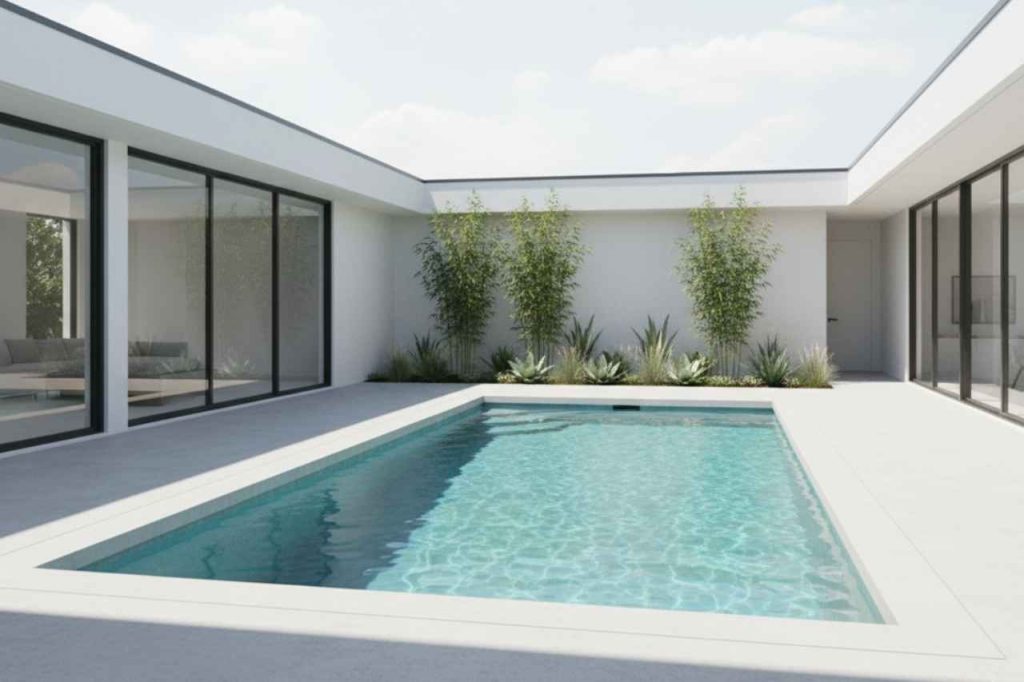
A precast plunge pool is a compact concrete pool built in a factory and delivered to your home as a single ready-made shell. It’s stronger than fibreglass, faster to install than custom concrete, and ideal for small backyards, courtyards, and sloping Sydney sites.
Precast plunge pools are ideal for small yards, courtyards, and sloping sites. They suit anyone wanting a cool dip or a peaceful water feature with minimal fuss.
If you’re looking for a durable precast concrete plunge pool for a compact Sydney backyard, our range is designed for tight-access blocks, courtyard homes, and sloping sites.
How Precast Plunge Pools Are Manufactured
A precast plunge pool is made in a factory where workers build a steel cage, pour strong high-MPa concrete, and cure it in a controlled room. After curing, the team adds a waterproof layer, tests the shell for leaks, and sends it to your home ready for crane installation.
A precast plunge pool is built indoors so every part of the shell comes out strong, smooth and even. The process starts with a steel cage that gives the pool its shape and strength. This cage sits inside a mould that matches the final pool design.
Next, the team pours high-MPa concrete into the mould. This concrete is much stronger than normal house concrete, so the pool can handle soil pressure, water weight and changes in temperature. After the shell is filled, it moves into a controlled curing room. The room keeps the heat and humidity steady so the concrete sets without cracks or weak spots.
Once the shell cures, the inside gets a factory-applied waterproofing system. This membrane stops leaks and keeps the water inside the pool where it belongs. The waterproofing is tested in the factory before the pool leaves.
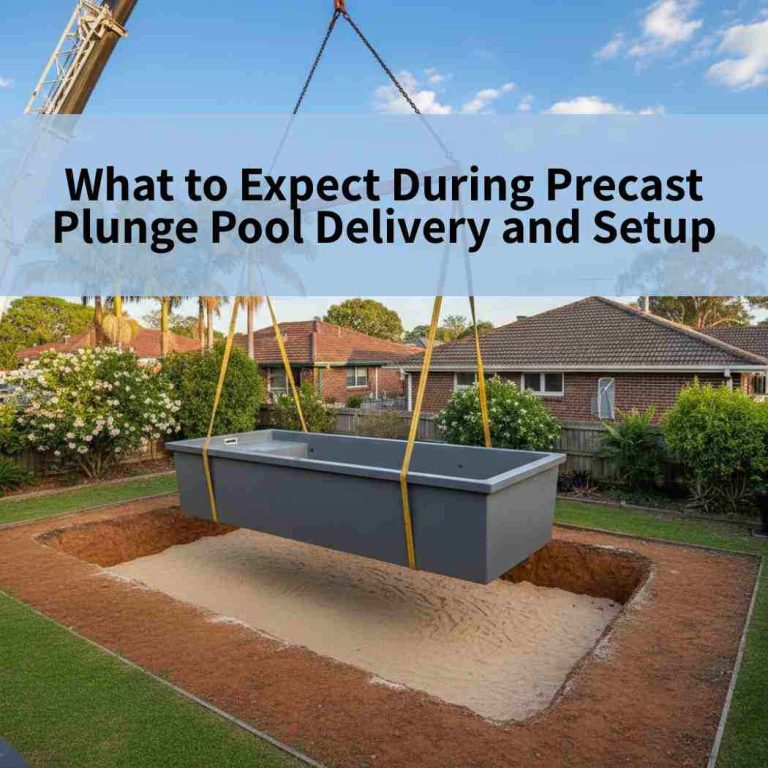
After all checks are done, the pool shell is lifted onto a truck. It arrives on site as a fully built, ready-to-install concrete plunge pool, waiting for the crane to place it in your yard. This controlled factory process is what makes precast plunge pools stronger, faster and more reliable than many on-site builds.
If you want a deeper look at each production stage, our guide to how precast plunge pools are manufactured and built in the factory explains the steel cage, concrete pour, curing process, waterproofing, and final quality checks in more detail.
What are Shapes and Sizes Available for Precast Plunge Pools?
Precast plunge pools come in three main shapes: rectangle, square, and round. Each shape offers different dimensions and works best in certain yard layouts. These shapes help homeowners pick a pool that fits tight areas, narrow blocks or open garden spaces. Most precast plunge pool sizes range from 2.5m to 5m, which makes them perfect for small Sydney homes and compact outdoor areas.
1. Rectangle Plunge Pools
Rectangle plunge pools are the most popular shape in Sydney because they use space well and sit neatly along fences, decks or retaining walls. The straight edges make the yard feel clean and modern, and they allow easy crane access in narrow lanes or slim driveways.
Common rectangle plunge pool sizes include:
- 2.5 m × 1.8 m
- 3.5 m × 2 m
- 4 m × 2 m
- 5 m × 2.5 m
These dimensions give you enough room to sit, cool off, or even take a short swim. Rectangular pools are the best pick for narrow yards, courtyard homes, small duplex blocks and long, slim gardens.
2. Square Plunge Pools
Square plunge pools offer a balanced, symmetrical look that works well in small spaces. Because all sides are equal, they act like a central feature in a patio or alfresco area without taking over the whole yard.
Typical square plunge pool sizes include:
- 2.5 m × 2.5 m
- 3 m × 3 m
Square pools are great for courtyards, compact outdoor entertaining areas, small patios and apartment-style backyards. Their shape feels calm and tidy, making them a good choice for relaxing, sitting and cooling off.
3. Round Plunge Pools
Round precast plunge pools soften the look of a yard and give it a resort-style feel. Their curved walls blend well with gardens, stepping stones and tropical or coastal landscaping.
Common round plunge pool diameters include:
- 2.5 m diameter
- 3 m diameter
The curved design makes round pools feel bigger inside and creates a friendly space for kids’ water play, hydrotherapy seating or quiet relaxation. They work best in garden spaces, curved layouts, soft landscaping designs and natural-style outdoor areas.
Features Found in Most Precast Plunge Pool Shapes
Regardless of shape, most precast plunge pools include:
- Built-in steps for safer entry
- Bench seating for spa-style comfort
- High-strength concrete shells (40–50 MPa)
- Internal waterproofing membranes
- Skimmer, inlets and plumbing pre-installed
- Tile-ready surfaces or pre-finished interiors
These features allow fast installation with fewer on-site risks.
Pros and Cons of Precast Plunge Pools
Precast plunge pools have a mix of strengths and limitations. They are built in a factory using strong high-MPa concrete, so they last a long time and install very quickly. But because the pool shell is made before it reaches your yard, you can’t change the shape or size after casting.
Pros of Precast Plunge Pools
- Quick installation, often placed in 1 day
- Very strong 40–50 MPa concrete shell
- Factory waterproofing is tested before delivery
- Modern, clean shapes with built-in steps
- Great for small yards and tight Sydney blocks
- Reliable quality because the pool is made indoors
Cons to Consider
- Set sizes only, no custom shapes
- Needs safe crane access for delivery
- No design changes once the shell is made
- Can cost more upfront than fibreglass pools
- Extra planning needed for sloping or tight sites
These pros and cons help you choose the right pool type for your home, your yard layout and your budget.
Understanding both sides helps you plan confidently and choose the right pool for your home.
Precast vs Fibreglass vs Custom Concrete Pools
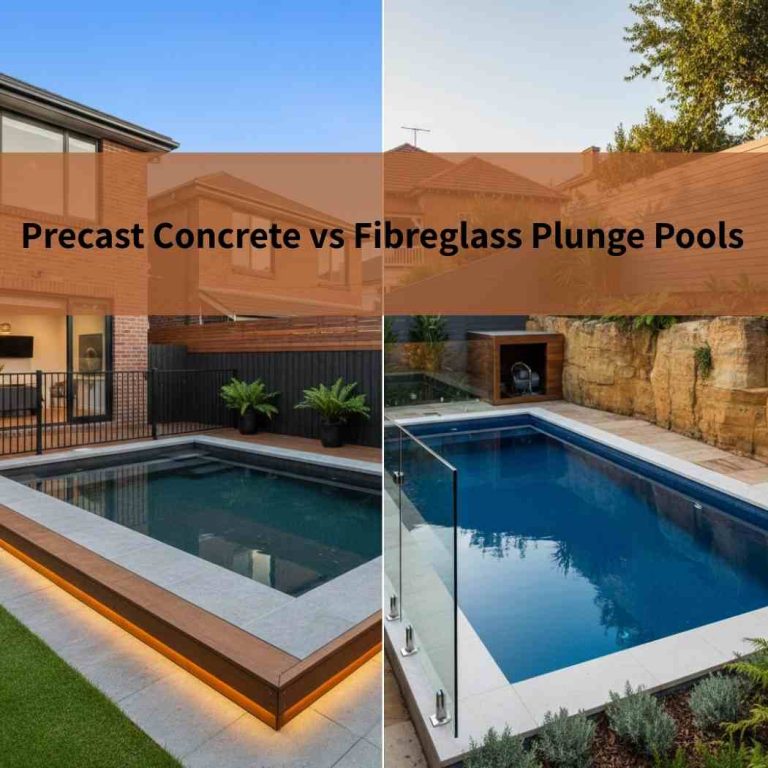
Choosing between a precast plunge pool, a fibreglass pool, and a custom concrete pool depends on your yard, budget and how much design freedom you want. Each pool type has its own strengths and limits, so understanding the differences helps you pick the best option for your home.
Precast Concrete Pools
Precast concrete pools are made in a factory using high-MPa concrete and a full steel cage. The shell is built, cured and waterproofed before it reaches your home. This gives you a strong pool that installs quickly, often in just one day. Precast pools work well for small yards, narrow Sydney blocks and homes that want a fast, clean installation. The sizes and shapes are fixed, but the finishes, coping and decking can be customised.
Fibreglass Pools
Fibreglass pools are the cheapest option. The shell is made from fibreglass and arrives in one piece. They install fast, usually within a week, but the material can flex, fade or bulge over time. Fibreglass pools also come in fixed shapes and sizes, which may limit design options. They suit homeowners who want a budget-friendly plunge pool without heavy concrete work.
Custom Concrete Pools
Custom concrete pools offer the most design freedom. You can create any shape, size or depth you want. This is the best option for architect-designed backyards, unique layouts or large landscaping projects. But custom concrete pools take the longest to build, often 4–8 weeks, and cost the most. They also require more on-site work, which can slow down the project in bad weather.
| Pool Type | Strength | Install Time | Cost Range | Key Benefit |
|---|---|---|---|---|
| Precast Concrete | Very strong (40–50 MPa) | 1–2 weeks | Mid-range | Fast & durable |
| Fibreglass | Light & flexible | ≈ 1 week | Lower | Cheapest start |
| Custom Concrete | Depends on the builder’s skill | 4–8 weeks | Highest | Fully customisable |
What This Means for Homeowners
- Choose a precast plunge pool if you want strength, quick installation and reliable quality.
- Choose fibreglass if you want the cheapest upfront price.
- Choose custom concrete if you want full design control and don’t mind the longer, more expensive build.
Precast Plunge Pool Styles
The main precast plunge pool styles are in-ground, above-ground, and semi-in-ground. Each option suits different block shapes, access conditions and budgets, giving Sydney homeowners flexible ways to add a compact concrete plunge pool to their yard.
In-Ground Precast Plunge Pools
- Fully set into the soil for a clean, built-in look
- Works perfectly with paving, tiles, turf and surrounding decks
- Gives the appearance of a high-end custom concrete pool
- Installs much faster because the shell arrives pre-made
Best For:
Flat yards and homeowners wanting a seamless, modern finish.
Above-Ground Precast Plunge Pools
- Ideal when digging is limited or impossible
- The shell sits above the soil, supported by footings or a level base
- Raised decks or steps can wrap around the pool
- Perfect for courtyards, narrow blocks, rooftops or areas with poor ground conditions
Best For:
No-dig sites, tight city lots and the fastest possible installation.
Semi-In-Ground Precast Plunge Pools
- Installed partly in the ground and partly above it
- Great for sloping or uneven blocks
- Reduces the need for expensive retaining walls
- Can create a spa-style or elevated modern look
- Works well with tiered landscaping or steps
Best For:
Sloping yards and properties needing elevation adjustments.
Best Style Quick Guide
| Style | Works Best For | Key Advantage |
|---|---|---|
| In-Ground | Flat blocks | Seamless, premium integrated finish |
| Above-Ground | No-dig or tight access | Fastest and simplest installation |
| Semi-In-Ground | Sloping yards | Levels the yard & reduces retaining wall costs |
If you’re ready to explore real options for your property, our precast concrete plunge pool solutions in Sydney can be matched to above-ground, in-ground, and semi-in-ground site conditions.
Design and Customisation Options
Designing a precast plunge pool is one of the most enjoyable parts of the process. Because the concrete shell arrives ready to install, homeowners can focus on the finishes, features and styling that shape the pool’s personality. From modern tiles to soft lighting and smart heating systems, every choice adds comfort, function and visual impact.
Finishes
Your pool’s internal finish sets the tone for the entire space. Each option affects colour, texture, maintenance and durability.
Tiles
- Available in bright blues, deep charcoal tones or stone-look designs.
- Easy to clean and highly resistant to stains, making them ideal for high-use outdoor areas.
- Provide a sleek, resort-style look that suits modern Sydney backyards.
Pebble (Pebblecrete)
- Natural, textured and slip-resistant.
- Blends beautifully with gardens, stone paving and timber decking.
- Great for families who want a durable, long-wearing surface that hides minor marks.
Polished Concrete
- Smooth, industrial and minimalist.
- Perfect for contemporary courtyard homes and architectural landscapes.
- Offers a seamless, high-end appearance with predictable maintenance needs.
Coping (Pool Edge)
Coping is the material that forms the pool’s edge, an important design element for both safety and appearance.
- Stone Coping: Granite, travertine or limestone creates a premium coastal-style finish.
- Porcelain Coping: Ultra-durable, colour-stable and comfortable underfoot.
- Timber-Look Coping: Gives warmth and character without the upkeep of real timber.
- Light Colours: Stay cool in full sun and give the pool a bright, airy feeling.
- Dark Colours: Provide a bold, luxury resort look and highlight architectural lines.
Jets & Lighting
Jets
- Bench Jets: Add gentle hydrotherapy for relaxation.
- Spa Jets: Stronger water pressure to ease tired muscles.
These features turn a compact plunge pool into a private wellness space.
Lighting
- LED Pool Lights: Energy-efficient, long-lasting and fully waterproof.
- Available in cool white, warm white or multicolour RGB modes.
- Improve night-time safety and create ambience for evening swimming.
Heating Options
Heating extends your pool’s use throughout the year and ensures comfort during cooler seasons.
Heat Pumps
- Most energy-efficient option.
- Maintain a consistent temperature year-round.
- Ideal for daily use or families who want predictable running costs.
Gas Heating
- Heats water quickly—perfect for spontaneous swims or Airbnb changeovers.
- Works well in cooler climates or shaded backyards.
Solar Heating
- Low running costs and environmentally friendly.
- Best for sunny areas with roof space for panels.
Tips for Choosing the Right Options of Precast Plunge Pools
Choosing the right options for your precast plunge pool depends on how you plan to use the pool and who will be using it. Different homes need different features, finishes and safety choices. Thinking about these early helps you pick the safest, most durable and most cost-friendly setup.
For Airbnb, Rental or Holiday Homes
Short-stay and rental properties need pool features that can handle lots of use and different types of guests. You want options that are strong, simple and easy to look after.
Good choices for Airbnb and rental homes include:
- Durable finishes like tiles or pebble interiors that resist marks, stains and scratches
- Vandal-resistant LED lighting that lasts long and uses little power
- Simple heating systems, such as basic heat pumps or solar, that guests can’t easily change
- Strong coping materials like stone or porcelain that don’t crack easily
- Low-maintenance decking such as composite decking or concrete paving
These options help reduce cleaning time, avoid repairs and keep your listing looking clean and professional. Guests get a nice experience, and you spend less on maintenance.
For Families With Kids
Family homes need a safe and friendly pool setup. Kids need easy entry, stable surfaces and good lighting during early evenings or playtime.
Good choices for families include:
- Soft or warm lighting that helps parents see the water clearly
- Non-slip finishes like pebble, textured tiles or slip-rated surrounds
- Built-in steps and bench seating that make the pool safer and easier to enter
- Rounded coping edges to avoid sharp corners
- Shallow ledges or seating zones where kids can play or rest
These options help create a safe and comfortable swimming space that kids can enjoy without worry.
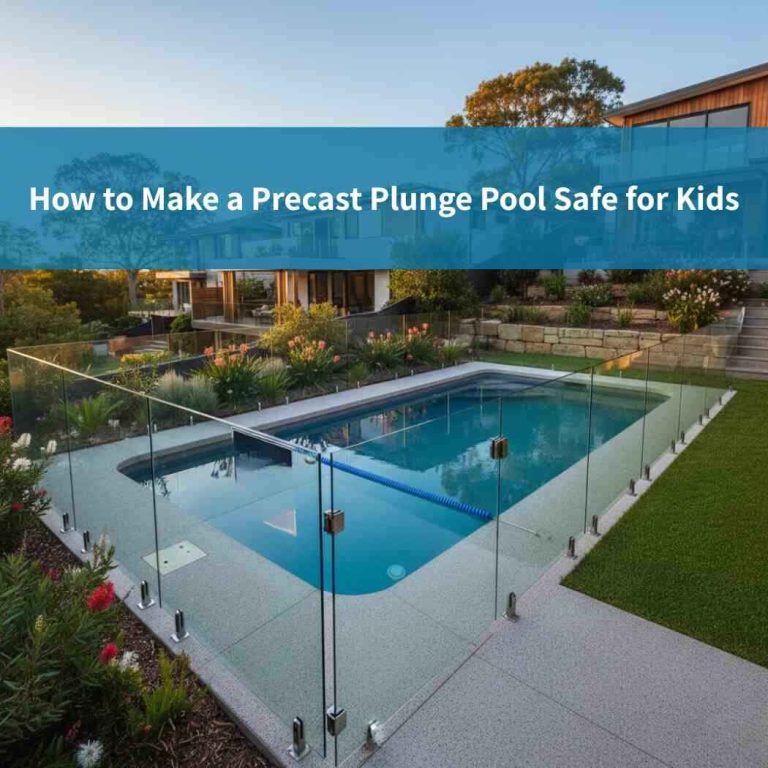
If your plunge pool will be used by a young family, our guide on how to make a precast plunge pool safe for kids explains the safety features, fencing rules, and design choices that matter most before installation.
What Materials Are Used in Precast Plunge Pools?
A precast pool is built from strong, reliable materials that are chosen to handle pressure, weather and long-term use.
Concrete Types
Precast plunge pools are made with high-MPa concrete, often around 40 to 50 MPa. This level of strength helps the shell resist cracking, soil pressure and water force. High-MPa concrete is one of the main reasons precast pools last a long time and stay stable in different seasons.
Reinforcement
Inside the concrete shell is a steel cage. This reinforcement gives the pool extra strength and helps it keep its shape. The steel bars are placed in a pattern that spreads pressure across the whole shell. This is very important for homes in Sydney, where soil can shift over time.
Waterproofing
A waterproofing system is added after the concrete cures. This layer protects the pool from leaks and moisture. Precast pools usually use a membrane that is tested in the factory before delivery. Good waterproofing helps the pool last longer and reduces future repairs.
Interior Finishing
The inside of the pool can be finished with tiles, pebble interior, plaster or polished concrete. Tiles give a clean and modern look. Pebble and polished finishes create a natural style. Each option changes how the water looks and how smooth the surface feels.
Coping Materials
Coping sits around the top edge of the pool. Materials like stone, concrete pavers, porcelain and timber-look boards are common. Coping helps set the style of the pool area and gives a safe, smooth edge for entering the water.
These materials work together to make a strong, safe and long-lasting precast plunge pool that fits many yard types and design ideas.
Site Preparation Checklist
Good site preparation is one of the most important steps when installing a precast plunge pool. A well-prepared site helps the installation go smoothly and prevents problems later.
1. Access
The pool shell is delivered by truck and lifted by a crane, so the site must have enough space for both. Homes in Sydney often have tight driveways or narrow lanes, so checking delivery access early is important. If access is limited, the crane may need to lift over the house.
2. Drainage
Proper drainage stops water from building up around the pool shell. The ground must slope away from the pool, and the base must be able to drain water safely. Good drainage helps protect the shell from pressure and keeps the area dry after rain.
3. Boundary Rules
Local rules control how close a pool can sit to fences, retaining walls and neighbouring properties. Sydney Council has guidelines to follow for safety and structure. The pool must meet these rules before installation begins.
4. Soil Testing
A simple soil test shows if the ground is stable. Soft soil, clay, or fill material may need extra support before placing the pool. This step helps prevent sinking, shifting or uneven pressure on the pool shell.
5. Utilities
The site must be checked for underground utilities. These include water lines, sewer pipes, stormwater drains, gas lines and electrical cables. Locating these early prevents damage during excavation and keeps the site safe.
6. Common Site Errors
Some of the most common problems include using the wrong base material, not levelling the ground correctly, ignoring drainage and failing to measure crane access. These mistakes can delay installation or cause structural issues later, so checking the site carefully is essential.
A prepared site makes the installation quicker, safer and more accurate, giving your precast plunge pool the support it needs for long-term use.
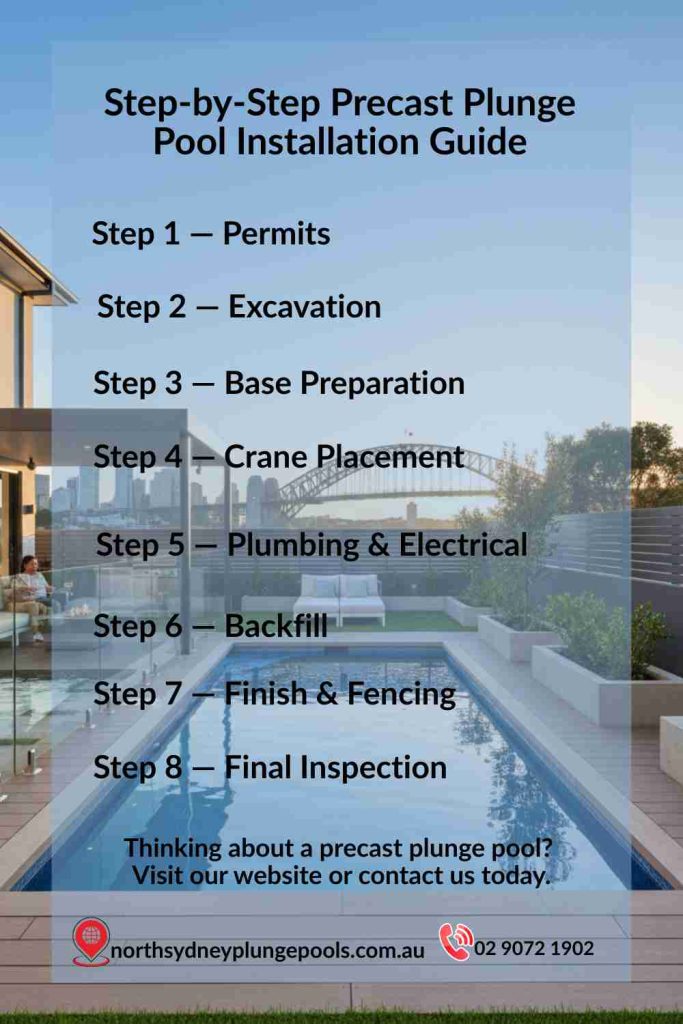
How Long Does It Take?
Once permits and site preparation are done, most precast plunge pools in Sydney can be fully installed within one to two weeks, making them one of the fastest pool types to add to your home.
How Much Do Precast Plunge Pools Cost in Australia?
The cost of a precast plunge pool in Australia depends on the pool size, access, excavation, finishes and the extra features you choose. Each part of the project adds to the final price, so understanding these costs helps you plan your budget.
Shell Pricing
A precast plunge pool shell usually starts from a mid-range price. Smaller shells cost less because they use less concrete and are easier to transport. Larger or deeper models cost more. Factory-made shells stay consistent in quality, which helps with long-term value.
Excavation
Digging the hole is a major part of the cost. On flat blocks, excavation is simple and cheaper. On sloping blocks or rocky sites, the price rises because the work takes longer. Sydney has many tight yards and sandstone areas, which can affect the cost.
Crane Costs
Crane hire depends on how far the pool must be lifted. Lifting over a house or into a narrow courtyard is more complex and can increase the price. Good planning keeps crane time short, which helps control the budget.
Plumbing and Electrical
Plumbing includes pumps, pipes, filtration and heating options. Electrical work includes lighting, power supply and safety switches. Extra features like spa jets or underwater lights add to the total.
Finishes
Interior choices such as tiles, pebble or polished concrete change the cost. Coping materials like stone or porcelain also affect the price. Premium finishes cost more but last longer and look better.
Fencing
Fencing is required by law.
Aluminium fencing is the most affordable.
The yard layout also affects the total fencing cost.
Glass fencing is more expensive.
Hidden Costs
Some extra costs to plan for include:
- Soil removal
- Temporary safety barriers
- Extra plumbing or electrical runs
- Landscaping repairs after installation
Planning early removes surprises.
Ownership Costs
Running the pool includes water care, electricity for the pump and heating. Heat pumps are efficient and help control energy costs. Regular cleaning and basic maintenance also keep the pool in good shape.
Your final price depends on your yard, access, pool size and the features you choose. Knowing each cost helps you find the best setup for your home and avoid unexpected expenses.
Landscaping Ideas for Precast Plunge Pool
Landscaping plays a big role in how your precast plunge pool looks and feels. The right plants, lighting and layout can make a small yard feel bigger, calmer and more private. Good landscaping also helps connect the pool to the rest of your outdoor space so everything feels neat and welcoming.
Tropical Style
A tropical look uses plants with big leaves, warm colours and soft shade. Plants like palms, banana plants and giant bird of paradise create a lush feel. This style works well with stone coping and warm lighting. It makes the pool area feel like a holiday spot right at home.
Coastal Style
Coastal yards use light colours, white stone, driftwood tones and easy-care plants. Many Sydney homes choose coastal designs because they match the modern architecture found in the area. Native grasses, low shrubs and hardy plants work well near salt air and wind.
Modern Minimal Style
A minimal look uses clean lines, open space and simple plants. Concrete pavers, charcoal stones and neat garden beds create a calm and stylish area. LED strip lighting or soft spotlights can make the pool stand out at night.
Privacy Ideas
Privacy is important in small yards. You can use hedges, tall grasses, bamboo, screens or louvres to block views from neighbours. Raised garden beds or vertical gardens are helpful for tight courtyards and terrace homes.
Lighting
Outdoor lighting makes the area safe, warm and beautiful after dark. Path lights, garden uplights and soft pool lighting all add atmosphere.
Landscaping completes the whole pool area and makes the backyard feel like a peaceful place to relax every day.
Decking Ideas for Precast Plunge Pool
The right decking can make your precast plunge pool safer, easier to use and more enjoyable. Good decking creates a smooth walking area, adds style to your yard and helps the pool blend naturally into the space. It also gives you a clean, level surface for seating, steps and outdoor furniture.
Timber Decking
Timber gives a warm and natural look. It feels soft under your feet and blends well with tropical or coastal styles. Hardwoods like spotted gum or blackbutt work well around pools because they are strong and handle weather changes. Timber needs regular oiling to stay in good condition.
Composite Decking
Composite boards are popular because they are low-maintenance. They do not rot, fade or splinter. Many Sydney homes choose composite decking when they want a clean, modern look without the upkeep of timber. Composite is good for busy families or rental homes.
Concrete
Concrete slabs or exposed aggregate surfaces create a modern and durable area around the pool. This option is slip-resistant and strong. You can colour it, stencil it or polish it to match your outdoor style. Concrete works well for minimal, modern and coastal designs.
Stone
Stone pavers offer a luxury feel. Limestone, travertine and granite are common choices. Light-coloured stone stays cool under the sun, which makes it comfortable for bare feet. Stone suits premium homes and adds a high-end finish around the pool.
Raised Decks for Above-Ground Pools
If your precast plunge pool is above-ground or semi-inground, a raised deck can help hide the pool walls and create a smooth entry area. It also makes the yard feel more connected. Steps, bench seating and built-in planters can be added for style and comfort.
The right deck material depends on your design style, budget and how much maintenance you want to do. A good deck turns the pool area into a comfortable and inviting space.
What Are the Benefits of a Precast Plunge Pool?
A precast plunge pool comes with many benefits that make it a strong choice for small yards, courtyards and tight Sydney blocks. These pools are built in a factory, so they are fast to install, very strong and easy to look after. Knowing these benefits helps you choose the right pool for your home and your budget.
1. Speed
One of the biggest advantages is fast installation. The shell is made in a factory, so it arrives ready to place. Once the site is prepared, the crane can install the pool in a single day. This is helpful for busy families and homes with tight timelines.
2. Strength
Precast plunge pools use high-MPa concrete and a strong steel cage. This gives the shell long-term strength and stability. The factory curing process also helps prevent cracks and weak spots.
3. Design Flexibility
Even though the shell shapes are fixed, you can customise the inside and outside of the pool. You can choose tile colours, coping materials, decks, lighting, landscaping and heating. This makes each pool feel unique in your home.
4. Sustainability
Precast pools are made in a controlled environment, which reduces waste and water use. They also last a long time, which means fewer repairs and fewer materials over the years. Heating systems like efficient heat pumps help lower energy use, too.
5. Long Lifespan
Because of the strength of the concrete and the quality control in the factory, precast plunge pools can last many years with proper care. They resist soil movement, weather changes and everyday use.
These benefits make precast plunge pools a strong choice for homes with small yards, sloping blocks or limited access in Sydney.
What Are the Common Problems With Precast Plunge Pools?
Precast plunge pools are strong and reliable when they are installed the right way. Most problems do not come from the pool shell itself. They usually happen because of poor planning, wrong materials, or rushed installation. Knowing these common issues helps you avoid mistakes and keep your pool safe for many years.
1. Repurposed Tank Pools
Some sellers use old water tanks or cheap concrete tanks and call them “plunge pools”. These are not engineered for swimming pressure. They can crack, leak or shift. A true precast plunge pool must be built in a factory with high-MPa concrete, steel reinforcement and proper waterproofing.
2. Weak or Low-MPa Concrete
If the concrete is not strong enough, the pool can develop cracks over time. High-MPa concrete helps prevent this.
3. Poor Waterproofing Systems
Weak waterproofing is one of the biggest risks. If the protective layer is rushed or poorly applied, leaks can appear months later. Factory waterproofing solves most of these issues.
4. Incorrect Base Material
If the base under the pool is not level or uses the wrong material, the pool may settle unevenly. This can cause stress on the shell. Crushed rock or engineered fill should always be used.
5. Wrong Backfill
Some installers use soil or clay as backfill. This traps moisture and puts pressure on the shell. Proper backfill keeps the pool stable and helps with drainage.
6. Crane Access Mistakes
If crane planning is wrong, the lift may fail, or the pool may not fit into place. Sydney homes often have tight streets, so crane access must be planned early.
7. Plumbing Misalignment
If plumbing is not matched to the shell openings, leaks can happen. All pipework must line up with the prefabricated points in the shell.
8. Hydrostatic Pressure Failures
Pools must manage groundwater pressure. If drainage is poor or the surge path is blocked, water can push against the shell. Good site prep stops this from happening.
9. Structural Cracking From Uneven Support
Uneven soil or missing backfill can stress the shell. A strong, level base and proper compaction prevent this.
Most of these problems can be avoided by choosing a skilled installer, following engineering plans and using the right materials from the start.
Real Use Cases for Precast Plunge Pools
Real examples help show how precast plunge pools work in different types of homes. These pools can fit small blocks, sloping yards and busy rental properties. By seeing how they are used in real situations, you can better understand which pool shape and style will work best for your own backyard.
Courtyards
Precast plunge pools work well in tight courtyard spaces where every metre matters. A slim rectangle or square model can fit neatly against a wall or garden bed. Many courtyard homes use these pools to create a calm, cool space without losing outdoor seating or garden areas.
Sloping Blocks
Sydney has many homes built on slopes. A semi-inground precast pool can be placed partway into the hill to balance the yard levels. This reduces the need for large retaining walls and helps create a natural, stepped design.
Airbnb and Holiday Homes
Short-stay properties often choose precast plunge pools because they install fast and add strong appeal to listings. They also use durable finishes that handle frequent use.
Small Yards
Many Sydney homes have small backyards. Precast pools give these yards a functional water feature without taking up too much space. Slim models or narrow-deep designs offer room for cooling off and relaxation even on compact blocks.
These use cases show how flexible precast plunge pools are, even in busy suburbs with limited space or challenging ground conditions.
Choosing the Right Precast Pool Company
Choosing the right precast pool company is one of the most important parts of your project. A good company will explain the process clearly, use strong materials, follow proper engineering plans and install the pool safely. They should also offer honest advice, fair timelines and clear warranties. Working with the right team helps your precast plunge pool last longer, look better and stay safe for many years.
1. Key Questions to Ask
Ask the company how their pools are made. A true precast plunge pool should use high-MPa concrete, a full steel cage and a single monolithic pour. Ask if the pool is waterproofed in the factory and if the waterproofing is tested before delivery. These questions help you understand the quality behind the product.
2. Engineering Checks
A good company works with structural and hydraulic engineers. They make sure the pool shell, base, drainage, plumbing and electrical systems are safe and strong. Engineering support is important for homes in Sydney where yards can be tight, sloped or close to buildings.
3. QA Systems
Quality assurance is a big part of a reliable precast pool. The company should follow checklists for curing, waterproofing, plumbing openings, and final inspections. A strong QA system reduces the chance of problems after installation.
4. Lead Times
Ask how long the build and installation will take. Precast pools are fast, but some companies may have longer queues during busy seasons. Knowing the timeline helps you plan your landscaping, deck and fencing work.
5. Warranty Clarity
A good company offers clear structural, waterproofing, and equipment warranties. You should understand what is covered, how long it lasts and what care is required to keep the warranty valid. Clear warranties show confidence in the product.
Choosing a company with strong engineering, honest guidance and proven experience helps your project run smoothly from design to installation.
Conclusion
A precast plunge pool is a strong, simple and fast way to bring calm, cooling water into a small Sydney backyard. You now know how these pools are made, how they are installed, what they cost, and the benefits they offer. You also learned how to choose the right size, shape, design finishes and decking ideas. With the right planning and the right installer, a precast plunge pool can turn a tight space into a relaxing place for everyday use.
If you’re ready to move from research to planning, explore our precast concrete plunge pool options in Sydney to find the right size, style, and installation approach for your home.
FAQs
1. How do I know if my yard is suitable for a precast plunge pool?
Your yard is suitable if it has safe crane access, stable soil and enough space for the shell. A site check confirms access, drainage, boundaries and underground services so the pool can be installed safely and correctly.
2. What is the total cost once excavation, crane hire, plumbing, electrical and fencing are included?
The total cost usually ranges higher than the shell price because excavation, crane hire, fencing, plumbing and electrical work add to the project. A full quote shows the true final price so you can plan with accuracy.
3. What shape or size will work best for my small or narrow Sydney yard?
The best shape for narrow yards is a slim rectangle or compact square. These models fit tight spaces and allow safe crane lifting. A site assessment helps match the pool size to your layout, access and design goals.
4. How long will the whole process take from council approval to installation and handover?
The full process usually takes a few weeks for approvals and one to two weeks for installation. Precast pools are fast because the shell is factory-made, and most delays come from permits, access planning and weather.
5. What warranties do I receive on the precast shell, waterproofing and pool equipment?
You receive separate warranties for the concrete shell, waterproofing and equipment. Structural warranties cover the shell, waterproofing covers leak protection, and equipment warranties apply to pumps, filters and lights. Clear terms help protect your investment long-term.