At North Sydney Plunge Pools, we help you with plans, checks, papers, and the final sign-off so you don’t stress.
In this guide, you will learn how the approval system works, what papers you need, which sites need special checks, and how to avoid costly mistakes.
Understanding Council Approvals for Plunge Pools
When you build a plunge pool in Sydney, you enter a small but important system of rules much like how the universe follows laws to stay in order. In this system, every pool must be approved through one of two pathways: a Development Application (DA) or a Complying Development Certificate (CDC). These pathways are not random; they exist to keep homes safe, structures stable, and neighbours protected.
A DA, checked by the Sydney Council, is used when your land has extra features like heritage areas, steep slopes, or easements. Council looks at your plan under the Sydney LEP 2013 and Sydney DCP 2013 to understand how your plunge pool will sit within the “environment” of your block just like studying how an object fits within space.
A CDC, approved by a Private Certifier, is the faster route. But it only works if your site meets every rule in the NSW Complying Development Code. There can be no heritage overlays, no flood risks, and no tricky boundaries. A single rule out of place shifts the project back into the DA process.
To begin this journey, you need detailed documents: a site plan, structural drawings, soil and drainage reports, engineering designs, and sometimes a BASIX certificate. These documents are like the “maths” behind your pool, they prove it will hold, drain, and stay safe over time. But before you collect drawings, reports, and certificates, use this checklist before installing a plunge pool at home to confirm zoning, access, and budget basics.
Both pathways use the NSW Planning Portal, which acts like a central hub where all information flows. Here you submit your plans, track progress, and complete approvals. Whether you choose council or a Private Certifier, the process usually takes 4–8 weeks, depending on the complexity of your site.
When the work is done, a Private Certifier or Council Inspector checks your fencing, barriers, and final build. They must confirm your plunge pool follows the NSW Swimming Pools Act 1992 and AS1926 safety standards. Only then can you receive the Occupation Certificate, the final “green light” that your plunge pool is safe to use.
Understanding these rules helps you avoid delays and costly mistakes. When you follow the approval system, your plunge pool becomes not just a feature in your backyard, but part of the organised structure of your home, much like how every star in the universe follows its own perfect path.
Zoning and Location Rules in Sydney
Zoning is one of the most important factors when building a plunge pool in Sydney because it determines where you can place the pool, what design rules apply, and whether you need extra reports. All zoning rules are controlled by the Sydney Local Environmental Plan (LEP) 2013 and the Sydney Development Control Plan (DCP) 2013. These documents outline the land-use rules for each suburb, including residential blocks, heritage areas, conservation zones, and mixed-use properties. If zoning overlays or easements complicate your design, speak with our licensed plunge pool company in Sydney to plan reports and submissions properly.
Most plunge pools are allowed in common residential zones such as R1, R2, and R3, but your exact requirements change depending on your site features. For example, homes in heritage conservation areas or properties that contain a heritage-listed building may need a Heritage Impact Statement to show your plunge pool will not affect the visual character of the home or streetscape. Properties with heritage overlays may also need design adjustments, such as limiting excavation depth or choosing finishes that match the historic setting.
If your home is part of a strata property, you must follow the Strata Schemes Management Act 2015, which requires formal written approval from the owners’ corporation. Some strata by-laws also include rules on structural changes, waterproofing, excavation, and noise, which may affect the location of the pool or whether you can install one at all.
Properties near easements such as drainage easements, sewer lines, or utility corridors face stricter placement rules. Sydney Council may ask for a survey report, engineering certification, or proof that the plunge pool construction will not affect underground services or neighbouring land stability.
Homes within conservation areas or environmentally sensitive zones may need additional checks, including planting plans, tree protection reports, or restrictions on excavation depth. The aim is to protect vegetation, landform, and surrounding character.
For sloped sites or homes in hilly suburbs, extra engineering is almost always required. Plunge pools need strong structural support, and an engineer may design retaining walls, pier systems, or drainage paths to stop soil movement. Sloped blocks also raise concerns about water flow, runoff, and stability, so Sydney Council may request geotechnical testing before approving the design.
Checking your zoning early prevents delays and costly redesigns. Homeowners should use the NSW Planning Portal to confirm zoning, overlays, easements, and land constraints before lodging a DA or CDC.
Pool Size, Depth, and Design Criteria
Sydney Council checks every plunge pool design under the Sydney Development Control Plan (DCP) 2013, which sets clear rules for pool dimensions, excavation depth, and structural impact on neighbouring land. These design rules ensure the plunge pool is safe, stable, and suitable for residential blocks in Sydney’s varied soil and environmental conditions.
A plunge pool in Sydney is generally defined as a compact, deep pool designed for cooling off, hydrotherapy, or relaxation, not for swimming laps. Most plunge pools installed in Sydney fall within:
- Length: up to 6 metres
- Depth: 1.2 metres to 1.8 metres
- Shape: square, round, or rectangular
- Excavation limits: dependent on soil type, groundwater, and slope stability
The DCP checks several design criteria, including:
1. Height and Surface Levels
Your plunge pool must not rise too high above natural ground level. Sydney Council limits external wall height and above-ground elements to minimise visual bulk, protect neighbour privacy, and prevent overshadowing. If your pool sits partly above ground, additional engineering and screening may be required.
2. Excavation Depth and Retaining Walls
Deep excavation can affect soil stability and drainage, especially on sloped sites. The DCP requires engineering reports for any excavation that significantly cuts into the land. Plunge pools often need retaining walls, pier footings, or reinforced concrete bases to stop soil movement.
Geotechnical testing may also be needed if the site has clay soil, rock layers, or unstable ground.
To avoid structural surprises from deep cuts and retaining walls, read our guide to excavation access problems for Sydney plunge pools before finalising design.
3. Structural Design Requirements
All plunge pools like precast, concrete, or fibreglass must meet structural engineering standards. Your engineer certifies that the pool shell, footing system, and surrounding area can handle:
- hydrostatic pressure
- soil load
- water weight
- movement on sloped blocks
Sydney’s clay soils often require stronger structures compared to sandy coastal soils
4. Drainage and Water Runoff Rules
Sydney Council checks drainage plans to ensure water does not flow onto neighbouring properties. Backwash and overflow water must connect to approved drainage systems. On steep blocks, additional stormwater controls may be needed.
5. Setback and Boundary Controls
A plunge pool must meet setback rules under the DCP. This includes distance from:
- property boundaries
- retaining walls
- neighbouring homes
- easements and pipes
Pools built too close to boundaries may require special engineering or redesigns.
6. Materials and Aesthetic Requirements
In heritage areas or conservation zones, Sydney Council may require the plunge pool to blend with the character of the property. This can include limits on external finishes, colours, coping style, and any above-ground elements.
7. Mechanical Equipment Placement
Equipment such as pumps, filters, and heat pumps must be placed where noise and vibration will not impact neighbours. The DCP includes noise limits and location rules for equipment enclosures.
By checking all these design rules early size, depth, structure, setbacks, drainage, and materials you can avoid delays and ensure your plunge pool meets all Sydney Council requirements under the DCP 2013 and local planning laws.
Safety, Fencing, and Compliance
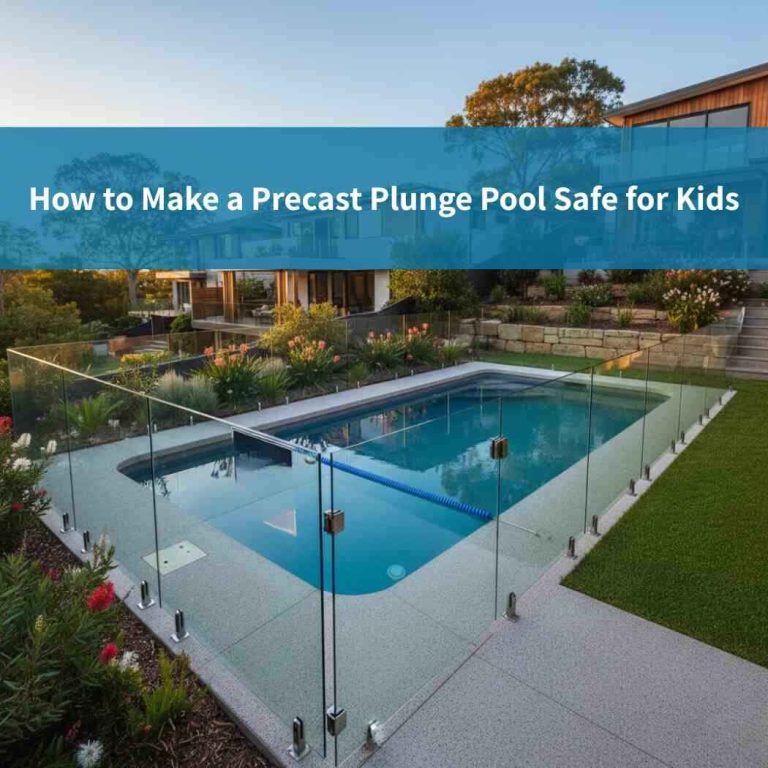
Every plunge pool in Sydney must meet strict safety rules under the NSW Swimming Pools Act 1992, the Swimming Pools Regulation 2018, and the Australian Standard AS1926. These safety requirements exist to prevent accidents, keep children safe, and ensure the pool area meets modern compliance standards before anyone can use it.
1. Fencing Height and Construction Requirements
Under AS1926.1, all pool fences in NSW must be at least 1.2 metres high. The fence must be strong, stable, and built from approved materials such as aluminium, steel, glass, or other compliant structures. Gaps between vertical bars must not exceed 100mm, and the bottom gap must be less than 100mm to prevent climbing or crawling underneath.
2. Self-Closing and Self-Latching Gate Rules
Your plunge pool gate must:
- close on its own
- latch automatically
- open outward, away from the pool
- have a latch placed at least 1.5 metres above ground or shielded from access
These rules ensure the gate cannot be left open and reduces the chance of unsupervised access.
3. No-Climb Zones (NCZ)
AS1926 requires a 900mm No-Climb Zone around the outside of the fence. Within this area, you cannot have:
- garden beds
- furniture
- retaining walls
- trees, branches, or overhanging objects
- horizontal bars that can be used as footrests
The NCZ protects children from using objects to climb over the barrier.
4. Boundary Fences Used as Pool Barriers
If a boundary fence forms part of the pool barrier, it must be at least 1.8 metres high. Additional climb-prevention measures may be needed if the fence has footholds or uneven surfaces.
5. Pool Area Rules Inside the Fence
Inside the pool zone, the space must be kept clear. Items that can be climbed like chairs, potted plants, or toys are not allowed within 900mm of the fence.
6. NSW Swimming Pool Register Requirements
Every residential plunge pool in Sydney must be listed on the NSW Swimming Pool Register. You must register:
- when the pool is installed
- before the final inspection
- before you can legally use the pool
If you sell or lease the property, you must provide a valid Swimming Pool Compliance Certificate or Exemption Certificate.
7. Barrier and Construction Inspections
A council inspector or Private Certifier checks:
- the fence
- the gate
- the latch
- boundary clearances
- the internal layout
- the CPR sign
- water entry points
- drainage and structural safety
You cannot use your plunge pool until the inspector issues a Certificate of Compliance.
8. CPR Sign Requirements
A compliant CPR (cardiopulmonary resuscitation) sign must be displayed inside the pool area, following NSW Health guidelines. The sign must be easy to read, weather-resistant, and permanently fixed.
9. Penalties for Non-Compliance
If your plunge pool does not meet the safety and compliance rules, Sydney Council may issue:
- fines
- rectification notices
- pool barrier failure orders
- stop-use orders
In serious cases, the pool may need to be drained or access blocked until repairs are completed.
Following these safety rules ensures your plunge pool meets NSW standards, protects children and visitors, and keeps your property compliant with NSW law.
When to Use a Private Certifier
A Private Certifier is an accredited building professional who can approve certain plunge pool projects under the NSW Complying Development Code (CDC Code). The CDC pathway is designed to fast-track approvals for simple, low-risk residential sites that meet all development standards without needing council assessment. This makes Private Certifiers a good choice when your property has no special constraints and the plunge pool layout fits within the NSW planning rules.
Under the CDC system, a Private Certifier acts as the approval authority. They review your plans, check compliance with the CDC Code, issue the Complying Development Certificate, inspect the site during construction, and provide the final Occupation Certificate when the plunge pool is completed. To perform these duties, Certifiers must be accredited under the NSW Building Professionals Board (now overseen by the NSW Department of Customer Service).
Private Certifiers can only approve plunge pools when the property meets specific criteria, including:
1. Zoning Requirements
Your land must be in a residential zone that allows plunge pools without needing a Development Application. The zoning can be checked through the NSW Planning Portal.
2. No Heritage Restrictions
CDC approvals are not allowed for:
- heritage-listed properties
- homes within heritage conservation areas
- sites with heritage overlays
These sites must lodge a Development Application (DA), as council must assess visual and structural impacts.
3. No Flood, Bushfire, or Environmental Restrictions
Private Certifiers cannot approve plunge pools on properties that fall within:
- flood-prone areas
- bushfire-prone land
- environmentally sensitive zones
These areas require council assessment to check safety risks and environmental impacts.
4. No Easements or Complicated Site Constraints
Properties with easements (such as drainage easements, sewer lines, or utility corridors) often require special engineering or council involvement. Sites with access problems, retaining walls, or unusual layouts may not qualify for CDC approval.
5. Compliant Setbacks and Placement
Your plunge pool must meet all setback rules in the CDC Code. If even one measurement does not comply such as the distance from a boundary, retaining wall, or dwelling, you must go through the DA process.
6. Suitable Site Conditions
Private Certifiers generally approve plunge pools on flat or gently sloped blocks. Steep sites, uneven land, or blocks requiring major excavation or retaining works fall outside the CDC guidelines and must be assessed through a DA.
7. Standard Construction and Engineering
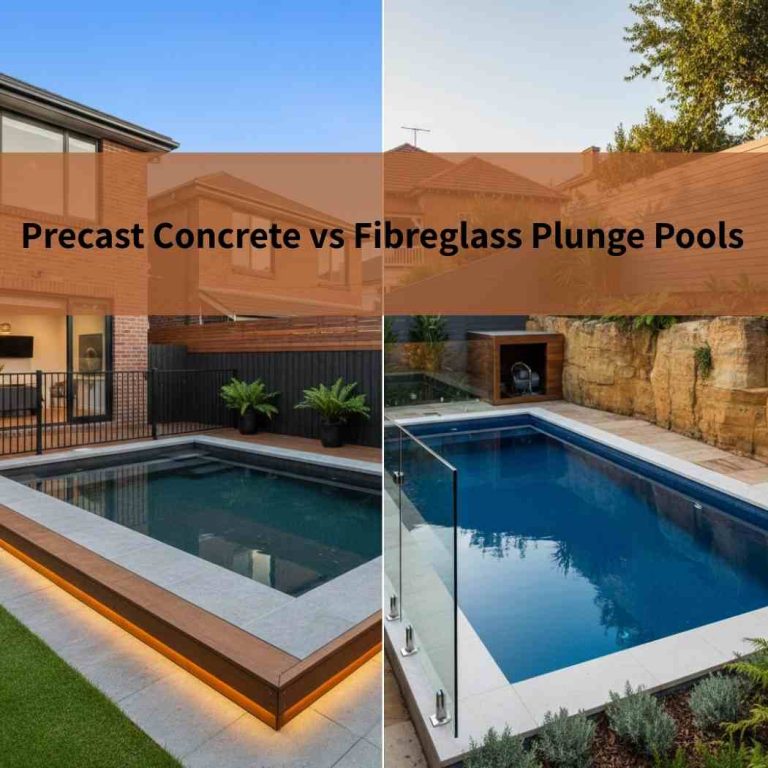
Plunge pools that use standard engineering such as precast concrete, fibreglass, or small concrete shells usually qualify. Custom or large-scale structural work may require council involvement.
8. Faster Approval Times
Most CDC approvals are completed within 10 to 20 days, compared to 4–8 weeks for a council DA. This makes a Private Certifier the best option for homeowners who want faster approvals and a streamlined process.
Choosing a Private Certifier is ideal when the site is simple, safe, and meets all CDC rules. However, if your property has heritage, environmental, structural, or boundary constraints, you must use the Development Application pathway through Sydney Council.
Fines and Non-Compliance Risks
Building a plunge pool in Sydney without proper approval can lead to serious legal, financial, and structural consequences. Sydney Council and NSW authorities enforce compliance under the Environmental Planning and Assessment Act 1979, the NSW Swimming Pools Act 1992, and local planning laws. These rules help protect safety, prevent structural failures, and maintain neighbourhood standards.
If you build, modify, or use a plunge pool without approval, you may face several enforcement actions:
1. Stop-Work Orders
Council may issue an immediate Stop-Work Order if construction has started without a Development Application (DA) or Complying Development Certificate (CDC). This legally forces all construction activity to halt until the correct approval pathway is followed. Ignoring this order leads to harsher penalties.
2. Fines and Penalty Units
NSW uses penalty units to calculate fines. As of recent guidelines, one penalty unit is approximately $110, and penalties can climb significantly depending on the breach.
Common fines include:
- $500–$5,000 for minor breaches
- $5,000–$10,000+ for serious unauthorised works
- Higher penalties for continued or repeated offences
Councils may impose fines for:
- building without approval
- unsafe pool barriers
- missing fencing
- failing a pool safety inspection
- ignoring a compliance notice
3. Rectification Notices & Orders
If your plunge pool breaches setback rules, fencing laws, or structural requirements, the council may issue a Rectification Notice. This forces you to repair, modify, or upgrade the work to meet regulations. If the issue is severe or ignored, a Compliance Order may follow.
4. Demolition or Removal Orders
If a plunge pool is built in a prohibited location – for example, over an easement, too close to a boundary, or on unsafe land, Sydney Council may order the pool to be removed, relocated, or demolished.
This is especially common when:
- the land is flood-prone
- the pool breaches structural safety rules
- there is major excavation without engineering approval
5. Legal Action & Prosecution
If rectification orders are ignored, the council can take legal action in the NSW Land and Environment Court. This can lead to:
- large fines
- legal costs
- mandatory demolition
- criminal conviction (for serious or repeated breaches)
6. Non-Compliance with the NSW Swimming Pools Act
If your pool fencing or barrier does not meet AS1926 safety standards, you can be fined and ordered to fix the barrier immediately.
Examples of safety non-compliance include:
- faulty gate latches
- climbable objects in the No-Climb Zone
- boundary fences under 1.8m
- unregistered pools
7. Impact on Property Sale or Lease
You cannot sell or lease a home with a plunge pool unless you provide:
- a Compliance Certificate, or
- an Exemption Certificate (rare and tightly controlled)
A non-compliant pool can delay the sale, lower the property value, or force expensive last-minute repairs.
Overall, failing to follow the approval process can lead to costly fines, forced changes, and major delays making early compliance the safest and cheapest choice.
Conclusion
Getting a plunge pool approved in Sydney becomes much easier when you understand the rules, documents, and approval pathways. Understanding where your pool can be placed, how deep you can excavate, and which reports are needed helps streamline the process. Whether your property is in a residential zone, a heritage conservation area, or a sloped site, early preparation is the key to a smooth project.
If you are unsure which pathway to choose or want help with your plans, site checks, engineering, or submission documents, the team at North Sydney Plunge Pools can guide you through each step. We help homeowners navigate zoning rules, safety standards, and all approval requirements so your plunge pool is built for safe, compliant, and ready for use.
FAQs
How can I check if my Sydney property is eligible for a Complying Development Certificate (CDC)?
Use the NSW Planning Portal’s online tool to check zoning and heritage status. If your site is in a conservation area or near an easement, you will need a full Development Application.
Are there extra approval steps for installing a plunge pool near property boundaries or easements?
Yes. Sydney Council has setback rules for pools close to boundaries. You may need an engineer’s report to prove the pool will not affect nearby structures or drainage.
What kind of soil or drainage testing is needed before approval in Sydney?
Most projects need a simple soil test. Engineers use the results to design safe retaining walls and drainage systems. Include this test in your DA or CDC papers.
How do I apply for retrospective approval if my plunge pool was built without permission?
You must lodge a Development Application explaining the existing structure. Council may ask for compliance certificates or changes to meet safety and zoning rules.
Can I fast-track my plunge pool approval through a private certifier in Sydney?
Yes, if your site meets the Complying Development Code. This skips council assessment and is faster for simple sites, but it is not allowed for heritage homes or steep blocks.